Cook County Property Tax Bill Schedule & Delays — When Bills Are Mailed and Due
Cook County property tax bills come in two installments a year, but in recent years they've rarely arrived on the textbook schedule. This guide explains when bills are mailed and due, why they've run late, the most recent dates, and a year-by-year history — so you can plan ahead and avoid penalties.
per year
55% of prior year
installment due date
installment due date
The 60-Second Version
- Two installments a year. The first is 55% of the prior year's total; the second is the balance, once the year's assessments, exemptions, and rates are final.
- The 2024 second installment was mailed November 14, 2025 and was due December 15, 2025 — months later than the usual July/August schedule, due to a county property-tax system overhaul.
- The 2025 first installment was due April 1, 2026 — about a month later than the typical March date, under a state law passed in late 2025.
- The 2025 second installment was due October 1, 2026: the bills were posted online August 18 and mailed by September 1, 2026, and an unpaid balance now accrues interest of 0.75% a month.
- You owe the tax even if a bill never reaches you. Check your balance and due date on the Treasurer's website by PIN or address.
- Delays don't pause appeals. You can appeal your assessment every year — and a lower assessment lowers the bill whenever it arrives.
01 · The basicsHow Cook County bills work
Cook County issues property tax bills in two installments each year:
- First installment — exactly 55% of the prior year's total tax, an estimate that doesn't yet reflect the current year's assessment, exemptions, or rate. It's mailed near the end of the prior year and due early in the year (historically around March 1, though the exact date is set annually).
- Second installment — the balance, calculated once the current year's assessed values, exemptions, and tax rates are finalized across every taxing district. Historically mailed in early July and due August 1 — but in recent years it has frequently been delayed into the fall or winter.
02 · The latestThe most recent dates
For Tax Year 2024 (payable in 2025), the County moved off the usual mid-summer schedule:
| Bill | Mailed | Due |
|---|---|---|
| 2024 First Installment | Early 2025 | March 4, 2025 |
| 2024 Second Installment | November 14, 2025 | December 15, 2025 |
| 2025 First Installment | Early 2026 | April 1, 2026 |
| 2025 Second Installment | By September 1, 2026 | October 1, 2026 |
The 2024 second installment ran nearly four months late, the result of a large-scale overhaul of the county's property-tax computer systems. Separately, a state law passed in late 2025 pushed the 2025 first installment to April 1, 2026 — about a month later than the traditional March date — to give property owners more breathing room between bills. The 2025 second installment was due October 1, 2026: two months after the statutory August 1 date, and about ten weeks earlier in the year than the 2024 bill. What that bill contains and what paying it late costs: Cook County 2nd installment 2025.
03 · Why lateWhy Cook County bills have run late
The delays aren't random — they're built into a multi-agency process:
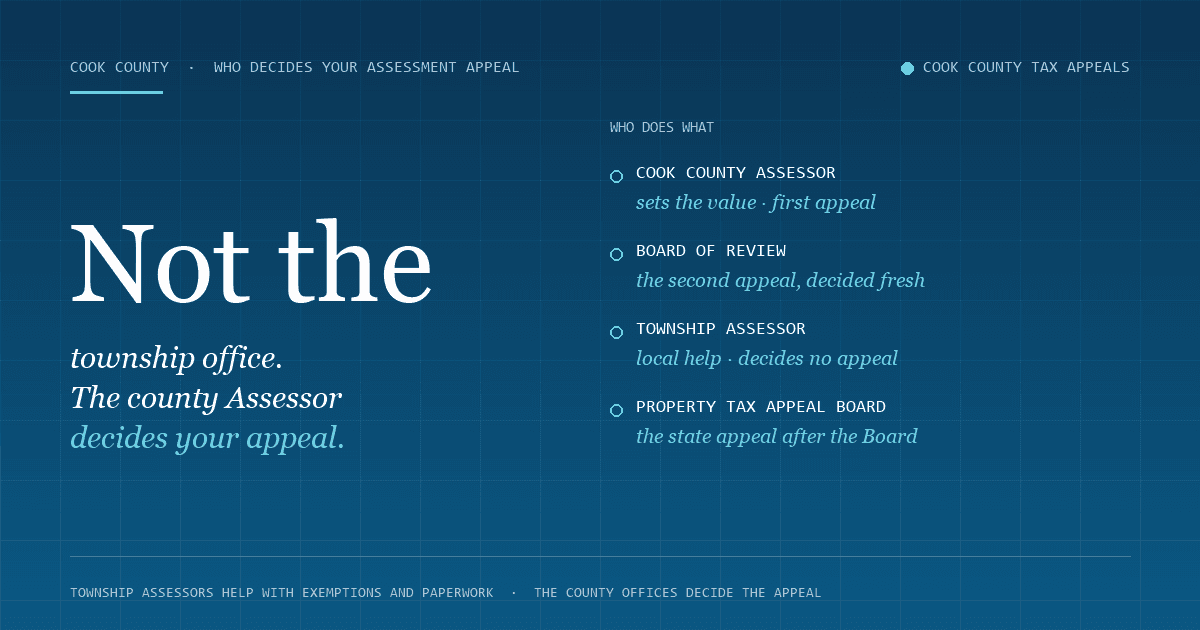
- The bill depends on finalized data. The Assessor must complete assessments, the Board of Review must resolve appeals, and the County Clerk must certify rates across hundreds of taxing bodies before the Treasurer can issue a second-installment bill.
- A system modernization slowed the workflow. For 2024, a county technology upgrade caused months-long delays in processing assessments and generating bills; bills can't legally be issued until all the data is certified.
- Reassessment years add volume. Heavy appeal activity in triennial reassessment years can push the second installment later still.
04 · The historyA year-by-year due-date history
The second installment is the one that moves. Here's how the recent schedule has trended:
| Tax Year (payable) | Second-installment due date | Notes |
|---|---|---|
| 2021 (2022) | December 30, 2022 | Latest on record; City of Chicago reassessment + delays |
| 2022 (2023) | December 1, 2023 | Still delayed into late fall |
| 2023 (2024) | August 1, 2024 | Back on the statutory schedule |
| 2024 (2025) | December 15, 2025 | Delayed again by the system overhaul |
| 2025 (2026) | October 1, 2026 | Two months after the statutory date |
The statutory due date for the second installment is August 1. Tax Year 2021's December 30, 2022 due date was the latest on record. After a brief return to schedule for Tax Year 2023, the 2024 bill slipped again — so it's wise to budget for a possible late-fall or winter second installment and confirm the current date each year.
05 · How to checkHow to check and pay your bill
Whether or not your paper bill has arrived, you can view and pay online:
- Cook County Treasurer's website — search by PIN or address to see your due dates, view or download your bill, and pay.
- Cook County Property Tax Portal — look up your bill and payment history by PIN or address.
- Keep your mailing address current with the Treasurer's Office so future bills reach you.
06 · AppealsHow delays relate to appeals
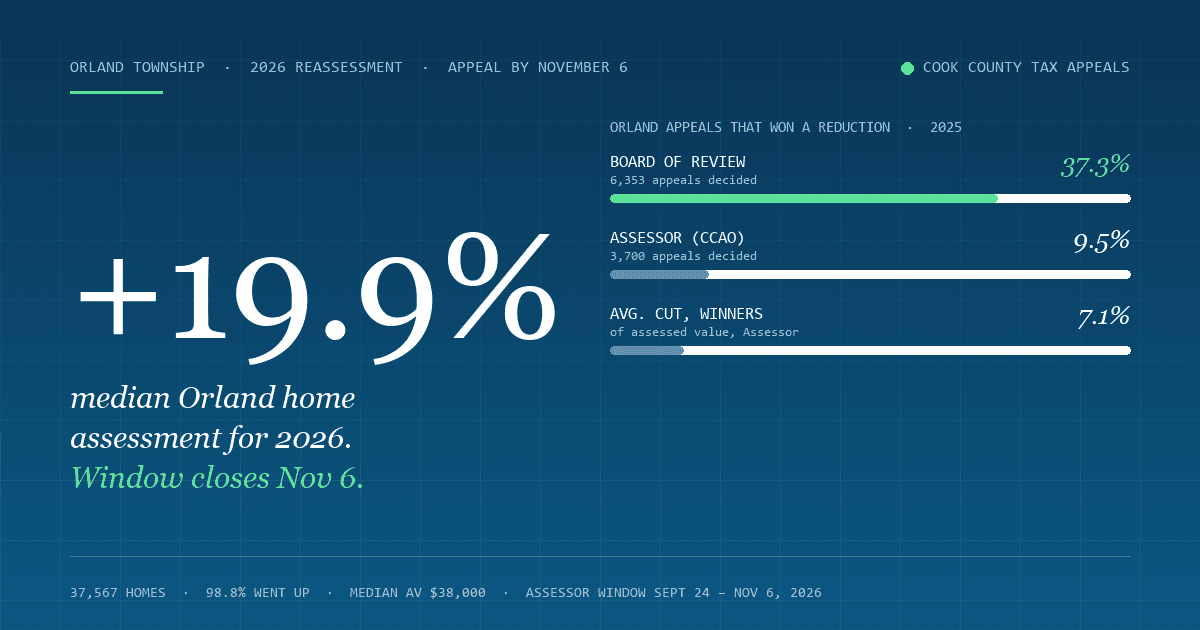
Two things are worth separating. First, appeals can affect bill timing: the Assessor and Board of Review must finish assessments and appeals before rates are certified, so heavy appeal volume in reassessment years can push the second installment later. Second — and more useful to you — a late bill doesn't change your right to appeal. You can challenge your assessed value every year, and a successful appeal lowers your assessed value, which lowers the bill whenever it's issued. If your second-installment bill looked higher than expected, that's the moment to check whether your assessment is fair.
Bill Higher Than Expected? Check Your Assessment
A delayed bill is still a bill — but it may be too high. Enter your address or PIN to see whether your assessment can be appealed. No upfront cost, you only pay if you save.
Check My AssessmentCook County Tax Bill Schedule FAQ
When are Cook County property taxes due?
In two installments. The first is 55% of the prior year's total, due early in the year (historically around March 1; the 2024 first installment was due March 4, 2025). The second is the balance, statutorily due August 1 but often delayed — the 2025 second installment was due October 1, 2026, and the 2024 one December 15, 2025. Always confirm the current date with the Treasurer.
When was the 2024 second installment due?
The Tax Year 2024 second installment was mailed beginning November 14, 2025 and was due December 15, 2025 — nearly four months later than the usual schedule, because of a county property-tax system overhaul.
When was the 2025 first installment due?
April 1, 2026 — about a month later than the traditional March date — under a state law passed in late 2025 to give property owners more time between bills.
Why are Cook County tax bills so often late?
The second installment can't be issued until the Assessor finishes assessments, the Board of Review resolves appeals, and the County Clerk certifies tax rates. A recent county technology overhaul and heavy reassessment-year appeal volume have repeatedly pushed bills into late fall or winter.
What happens if I don't get my bill or pay late?
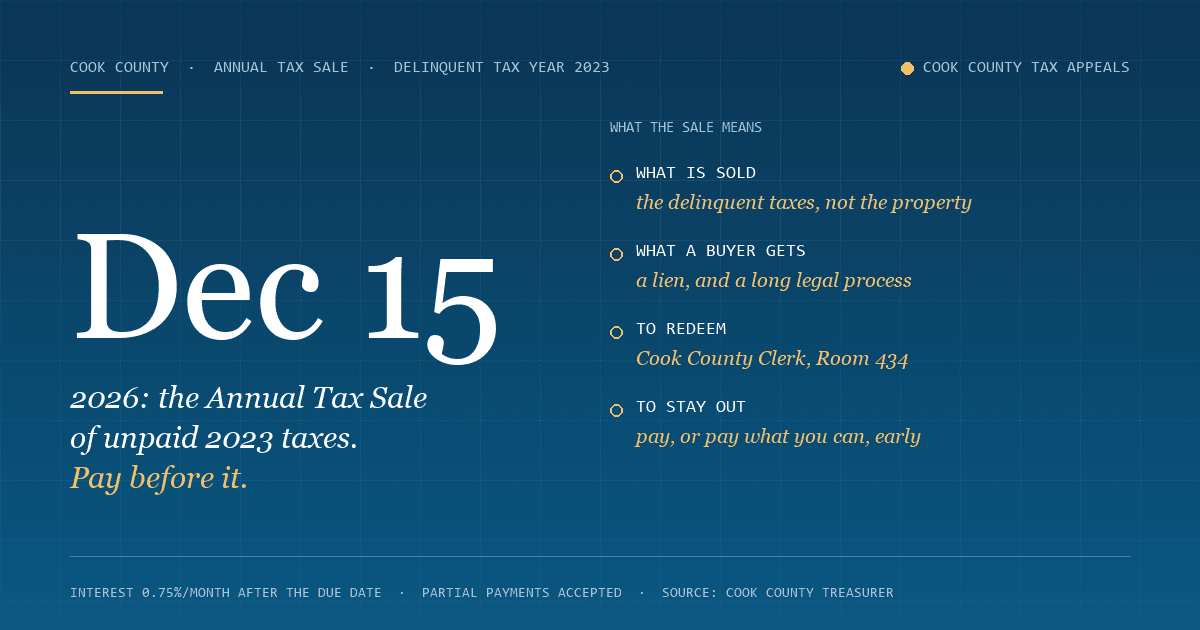
You're legally responsible for paying on time even if no bill arrives. Late payments accrue interest at 0.75% per month, and continued nonpayment can lead to the annual tax sale. Check your balance on the Treasurer's website if a bill is late.
Notes & Sources
- 2024 second installment: mailed beginning November 14, 2025, due December 15, 2025 — announced by Cook County officials (Office of the County Board President) and widely reported (WTTW, Chicago Sun-Times). Delay attributed to a county property-tax system overhaul; second installment is statutorily due August 1.
- 2024 first installment: due March 4, 2025 (Cook County Treasurer). First installment is 55% of the prior year's total tax.
- 2025 first installment: due April 1, 2026, under a state law passed in late 2025 (about a month later than the traditional March date). 2025 second installment: posted online August 18, mailed by September 1 and due October 1, 2026 (Cook County Treasurer).
- Second-installment due-date history: Tax Year 2021 due December 30, 2022 (latest on record); Tax Year 2022 due December 1, 2023; Tax Year 2023 due August 1, 2024 (return to the statutory schedule). Sources: Cook County government announcements, Cook County Treasurer, Civic Federation.
- Owner responsibility and interest: under the Illinois Property Tax Code (35 ILCS 200/), the owner is responsible for timely payment even if a bill is not received; late first-installment payments accrue 0.75% per month. This article is general information, not legal or tax advice — always confirm current dates with the Cook County Treasurer.
Keep Reading
This guide explains the Cook County property tax bill schedule and is general educational information, not legal or tax advice. Mailing and due dates are set by the Cook County Treasurer, Assessor, Clerk, and Board of Review and change from year to year — the dates here were accurate as reported for the years shown, but you should always confirm your current due date with the Cook County Treasurer. Interest and penalty rules are set by the Illinois Property Tax Code. Representation is subject to a written engagement agreement.