When a Cook County property tax bill goes unpaid, the unpaid tax can be sold. Each year the Cook County Treasurer holds an Annual Tax Sale at which bidders pay a property's delinquent taxes, plus interest and penalties, and in return take a lien on the property. The owner does not lose the property at the sale, but the clock that can lead there has started. This is how the sale works, and how to keep a bill out of it.
The short version
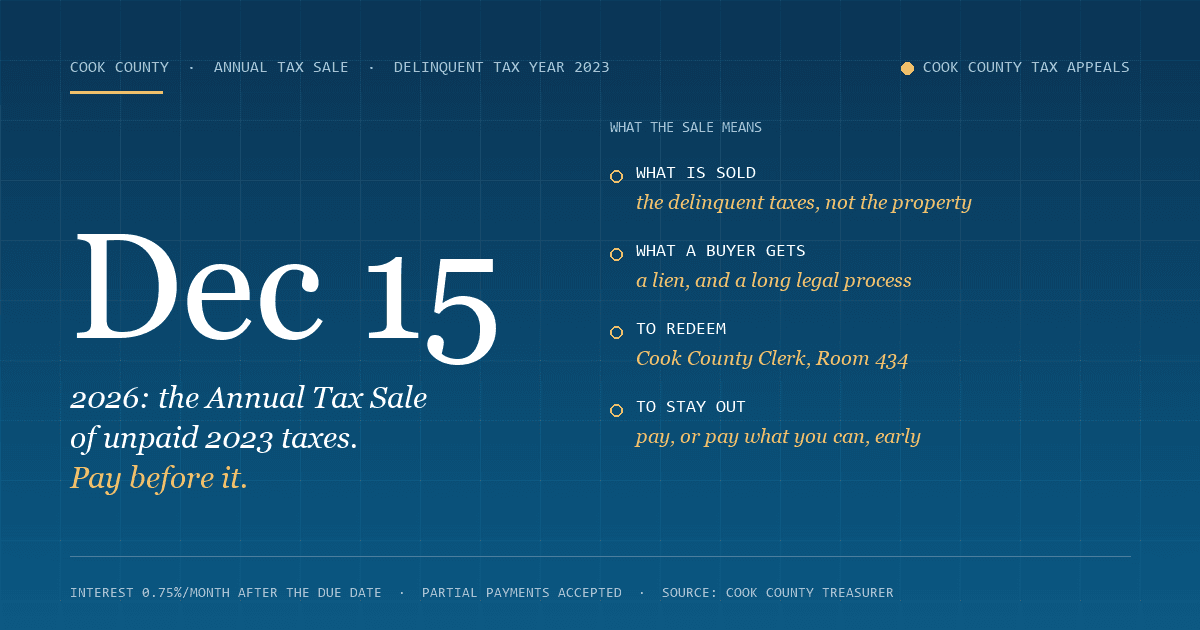
| Next Annual Tax Sale | December 15, 2026, for delinquent Tax Year 2023 taxes (Cook County Treasurer) |
| What is sold | The delinquent taxes, with interest and penalties, not the property |
| Interest on unpaid tax | 0.75% a month after the due date (Tax Year 2023 and later) |
| To redeem sold taxes | Cook County Clerk's Office, 118 N. Clark Street, Room 434, (312) 603-5656 |
| To check a property | The Treasurer's delinquent-tax search on cookcountytreasurer.com |
The Annual Tax Sale
Under Illinois law, when a parcel's taxes are delinquent, the full delinquent amount, plus interest and penalties, is offered at the Annual Tax Sale. Registered bidders who post collateral or a bond take part. The Treasurer's Office has scheduled the next sale for December 15, 2026, and publishes lists of properties with delinquent Tax Year 2023 taxes, along with a guide to avoiding the sale in English, Spanish and Polish.
A tax buyer does not buy the property. In the Treasurer's words, by paying the delinquent taxes the buyer obtains a tax lien, and to keep that lien or acquire any other interest in the property the buyer must follow every step the state statutes, rules and court decisions require.
The Scavenger Sale
A second sale, the Scavenger Sale, offers taxes on properties with three or more delinquent tax years. It used to be required every two years; a 2023 law made it optional, and it is now held only when the Cook County Board orders it. The minimum opening bid is $250, or half the total tax due if that is less than $500.
If your taxes were sold
The Treasurer's Office cannot give legal advice about a tax sale and advises owners to get their own attorney's advice. It describes three routes:
- Redemption. If the taxes really were delinquent, you redeem them through the Cook County Clerk's Office: order an Estimate of Redemption and pay that bill. Do it quickly, because delay adds interest and costs.
- Sale in error. If the taxes should not have been sold, for example because they were paid before the sale, the property was not taxable, it was assessed twice, or a county official made an error other than a judgment about value, you ask the Treasurer's Office for a sale-in-error.
- Redemption under protest. A specialized statutory procedure for owners who believe the taxes were not delinquent.
If you need a lawyer and do not have one, the Treasurer points to the Chicago Bar Association's Attorney Referral Center, (312) 554-2000, for an attorney who concentrates in real estate taxation.
How to keep a bill out of the sale
- Pay on time, or pay what you can. The Treasurer accepts partial payments until taxes are sold. State law does not allow a formal payment plan, but paying as much as you can limits the interest and your exposure to the sale. See paying monthly.
- If a mortgage company pays, check that it did. Look up your PIN a few days after each due date. Under federal and Illinois law a lender that pays late or on the wrong PIN is liable for the late charge and cannot pass it on to you.
- Look for help before the sale. Seniors can ask the Treasurer about the Senior Citizen Real Estate Tax Deferral Program, and every owner should make sure the exemptions they qualify for are on the bill; a missing one is corrected with a Certificate of Error.
Not paying does not lower the bill
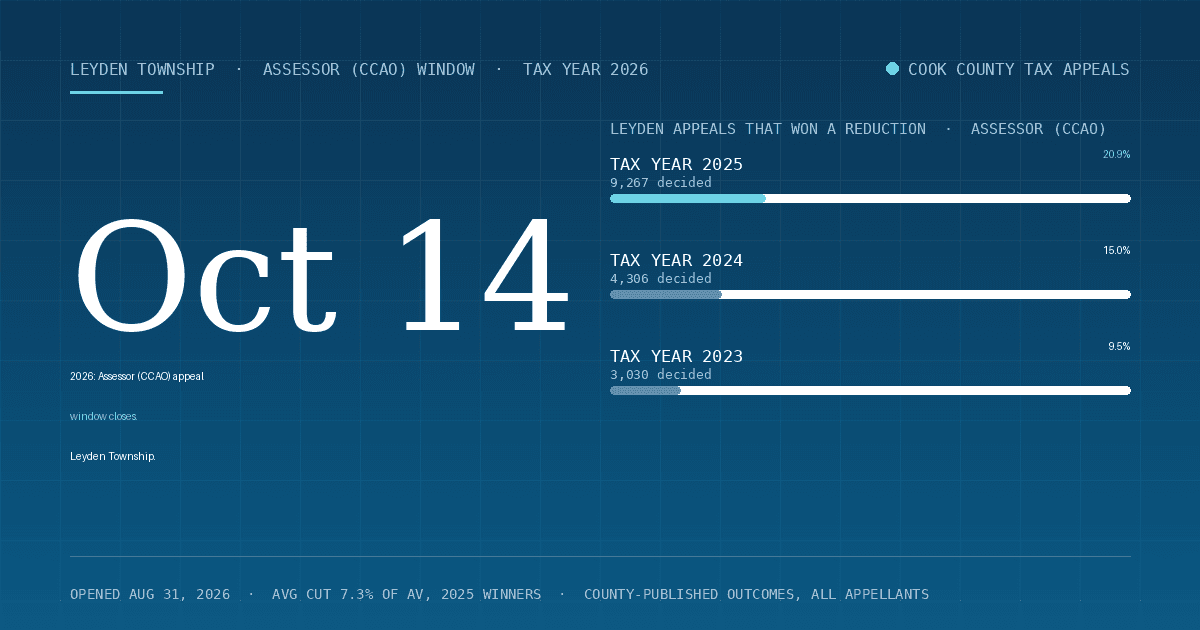
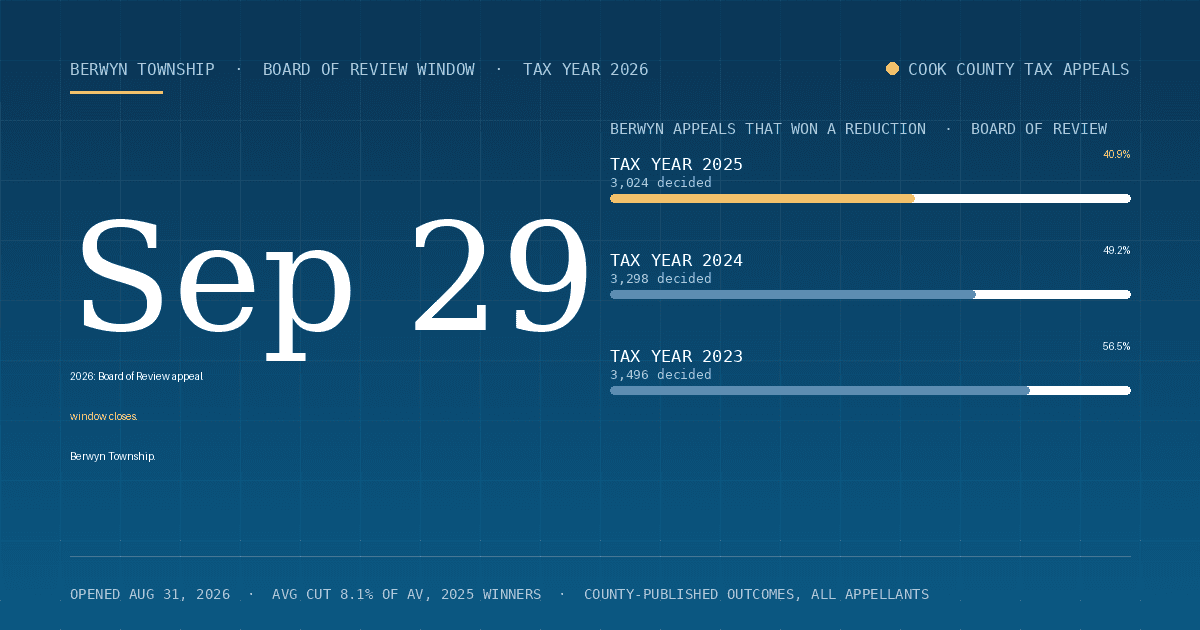
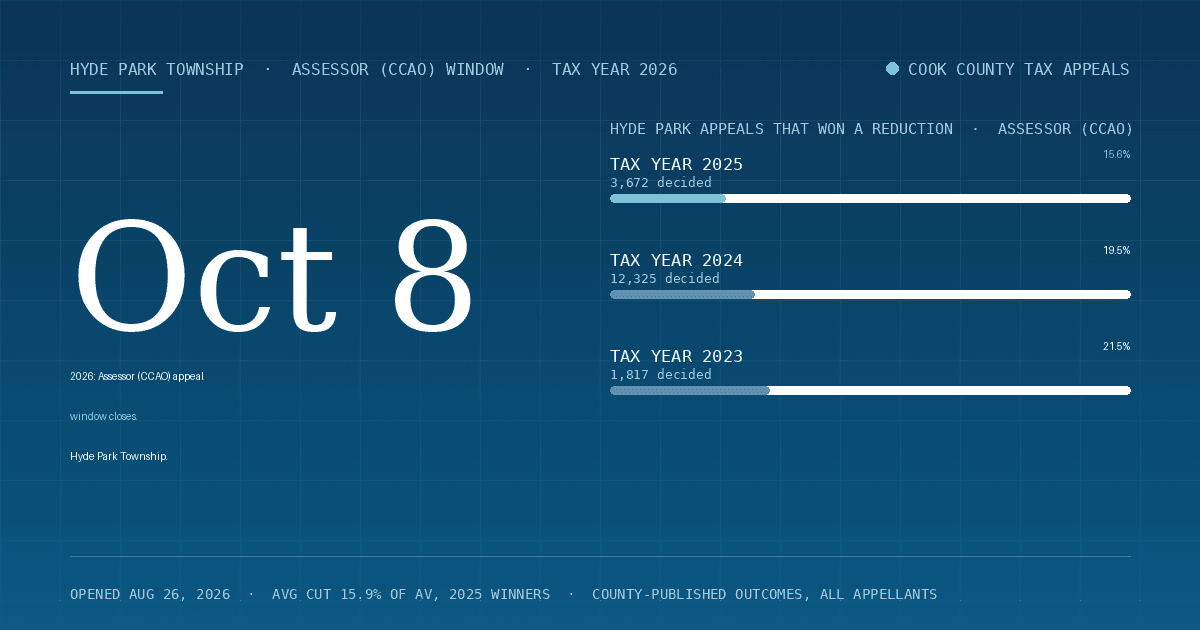
Holding back payment in protest of a high assessment only adds interest and risk. The way to lower the tax is to lower the assessment behind it, by appealing in your township's window; a reduction on a bill already paid comes back as a refund. Every township's dates are on the deadlines page, and how to pay Cook County property taxes covers the ways to pay.
We are a Cook County property tax law firm: attorney and CPA, focused on assessment appeals. Our fee is 25% of the first year's savings, nothing if there is no reduction. Enter your address to see where your home stands.