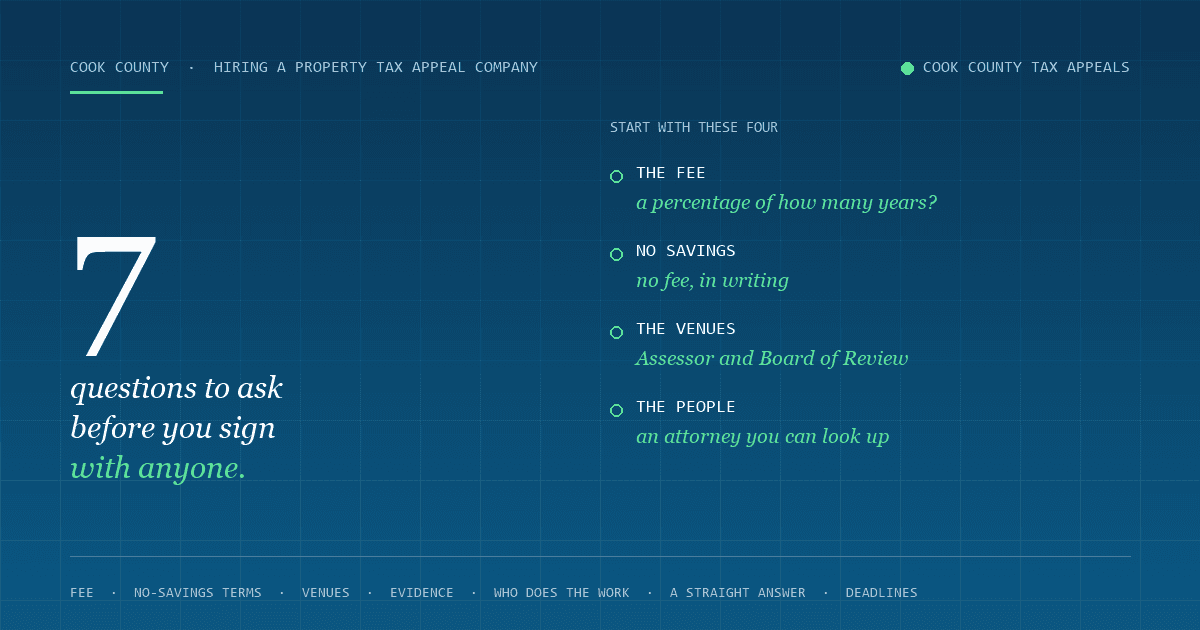
Every assessment season, Cook County owners get letters from property tax appeal companies offering to lower their bill. Some are law firms, some are not, and their terms differ more than their mailers suggest. You do not need anyone: the Assessor takes appeals online and charges no filing fee. But if you hire help, these are the questions that separate one offer from another.
1. What exactly is the fee a percentage of?
Many appeal services work on contingency: a percentage of the tax you save, and nothing if there is no reduction. The percentage is only half the answer. Ask what it applies to: the first year's savings only, or every year the lower value lasts? In a reassessment township the value can carry forward for three years, so "33% of the savings" can mean one year's savings or three. Ask, too, whether there is a minimum fee, a filing fee or a charge if the case is dropped.
2. Is there any fee if nothing is saved?
The answer should be no, and it should be in writing, along with how the savings are calculated: on the tax bill, after exemptions, for the specific PIN.
3. Will they file at both venues?
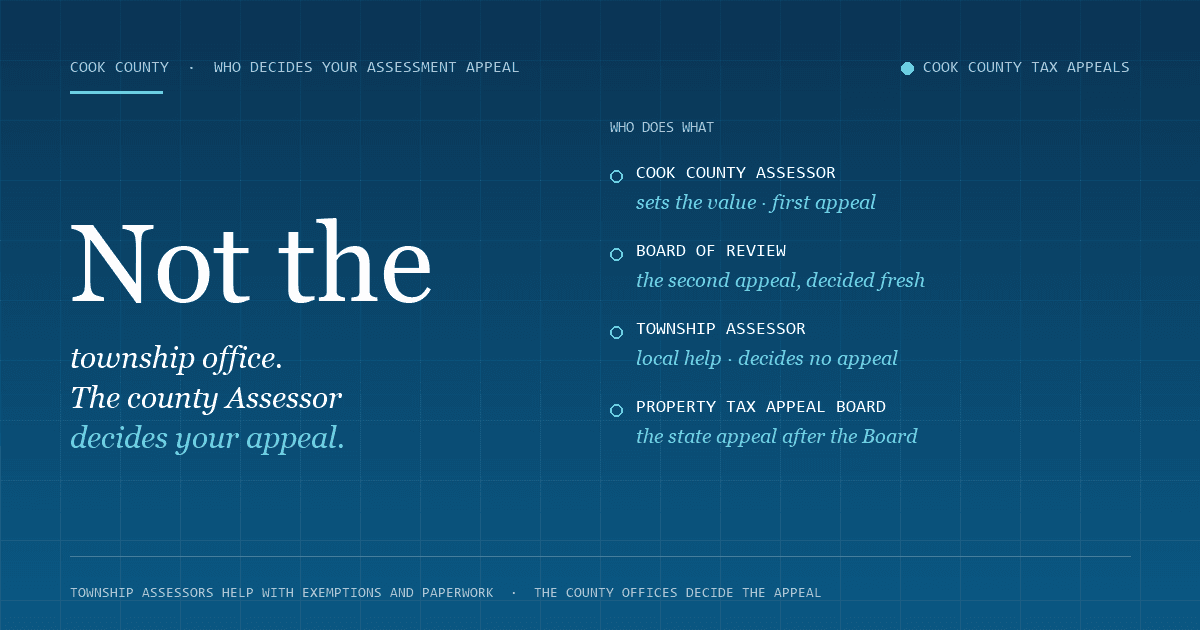
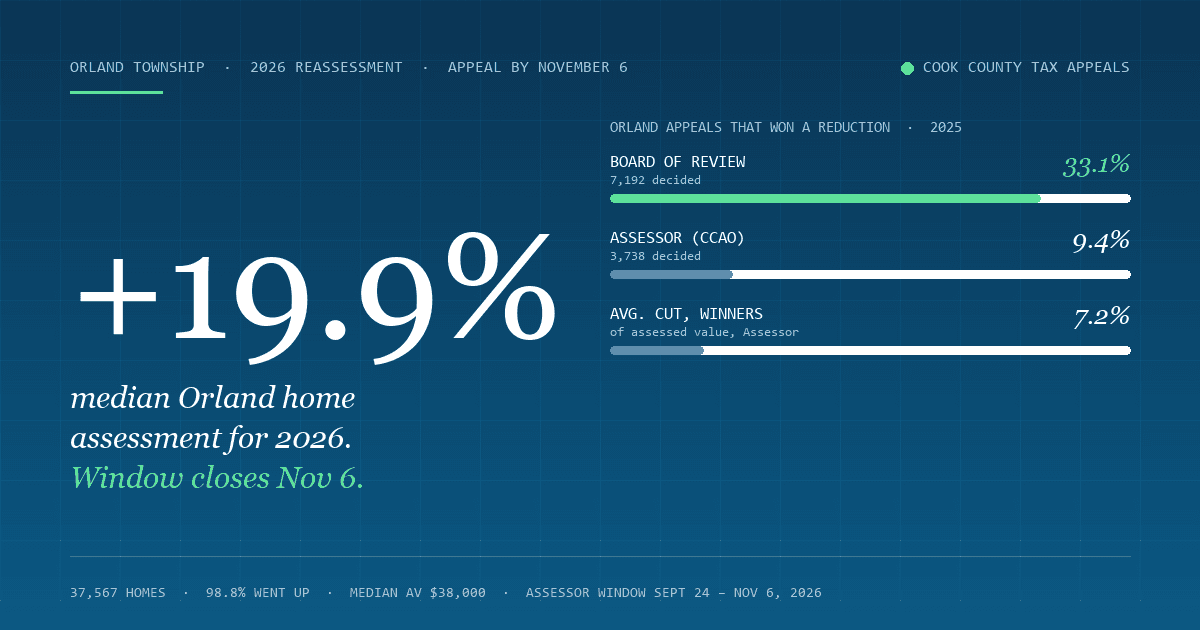
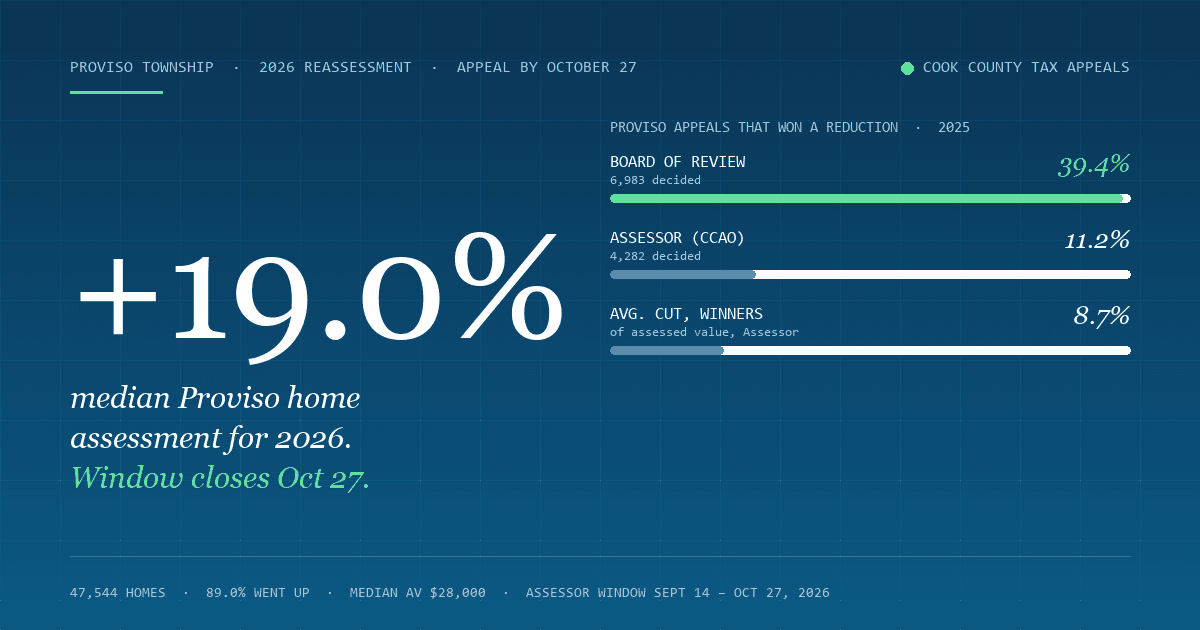
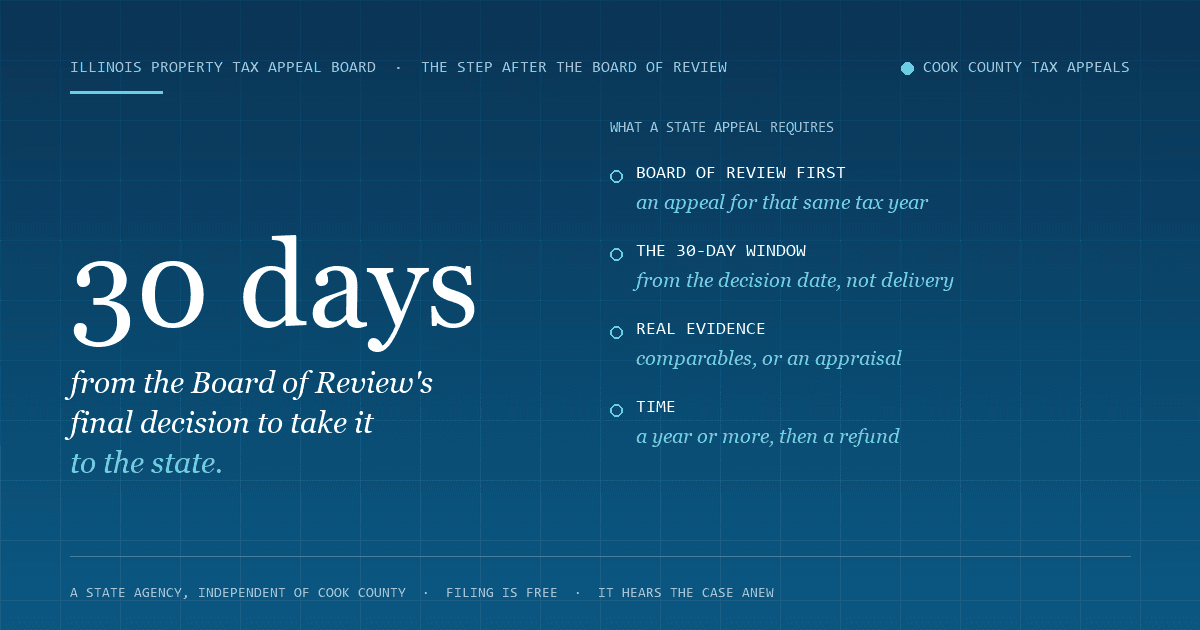
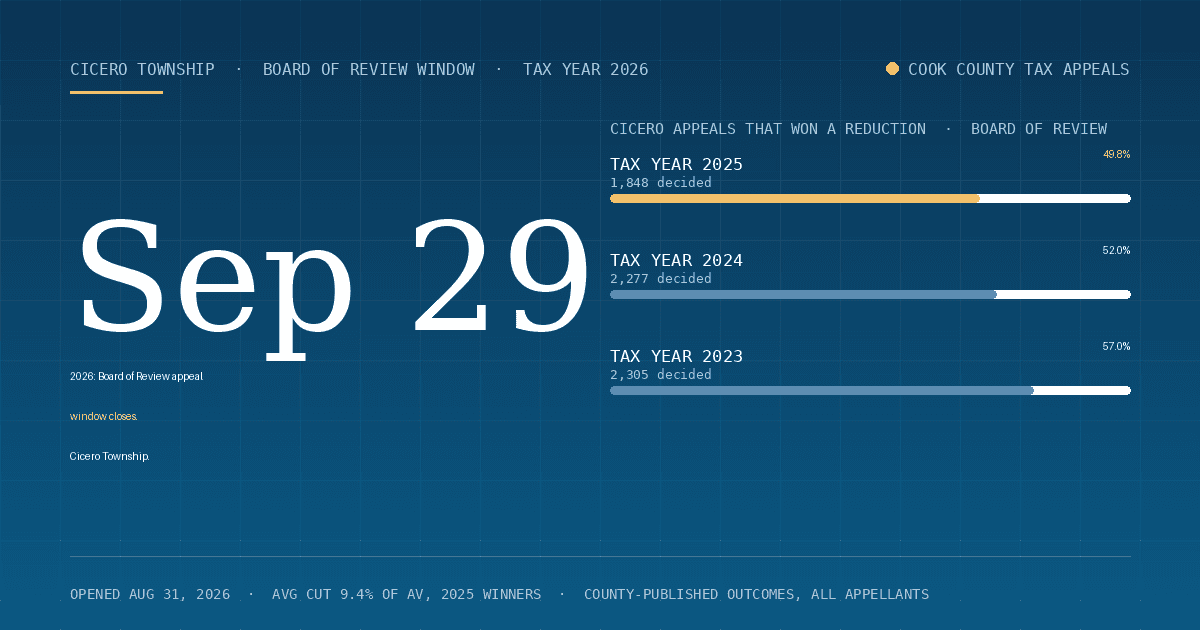
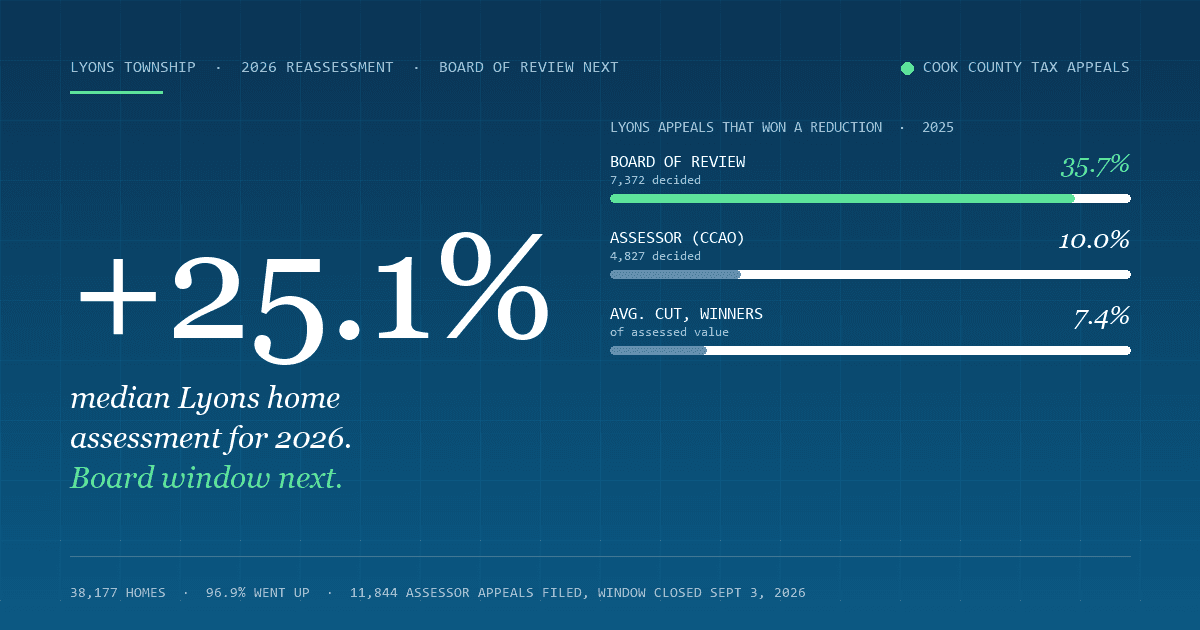
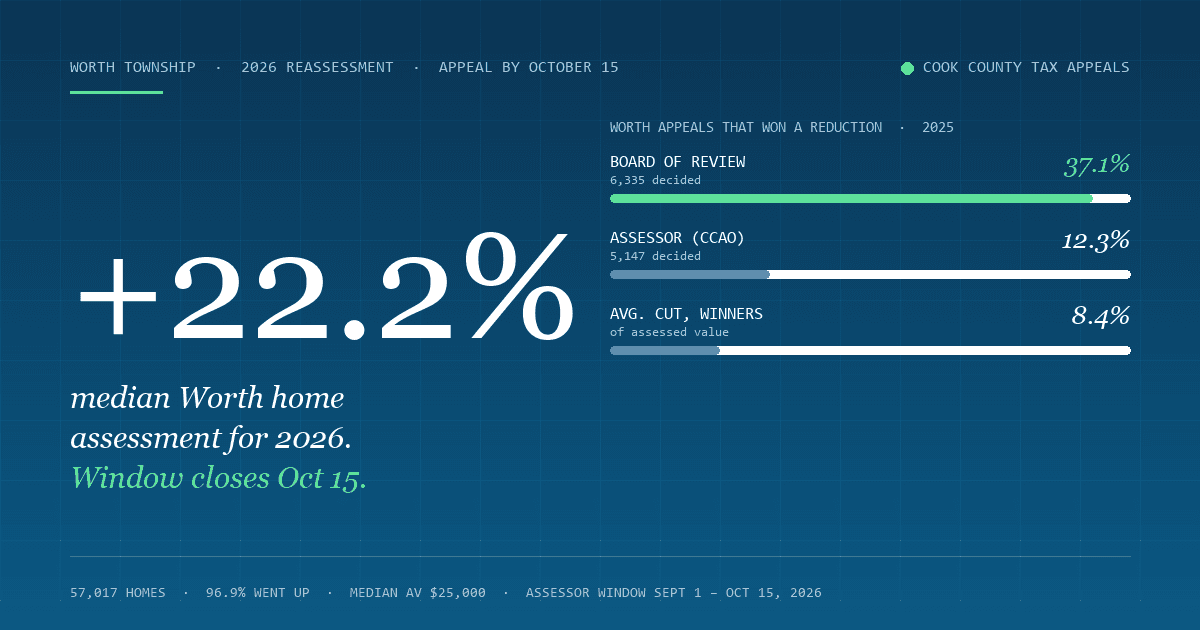
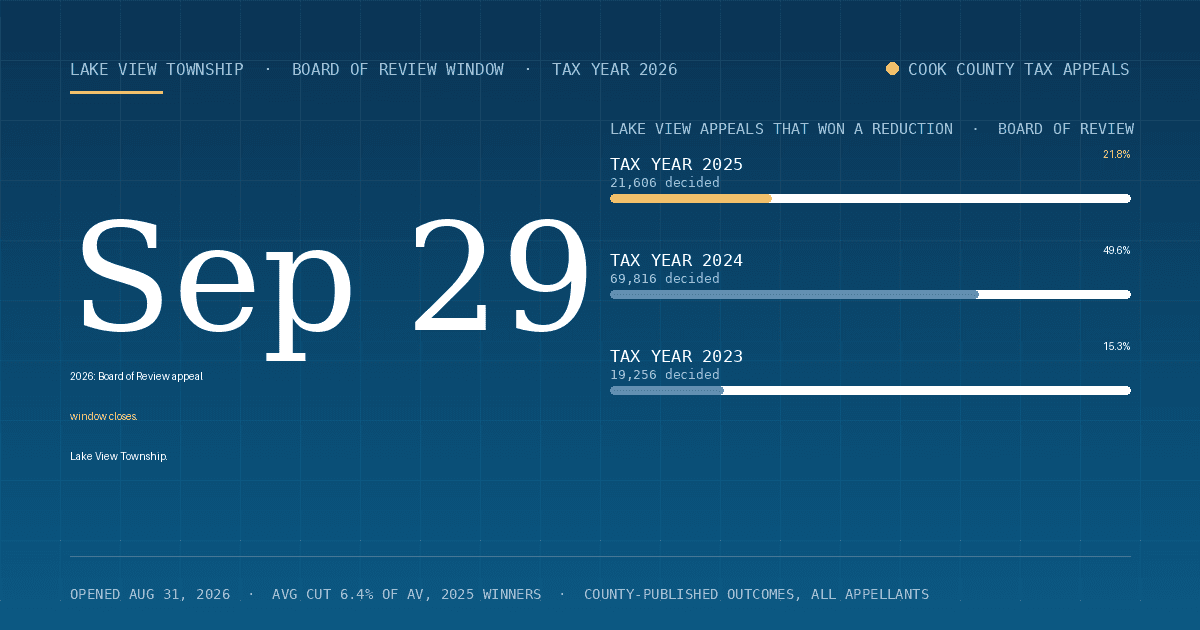
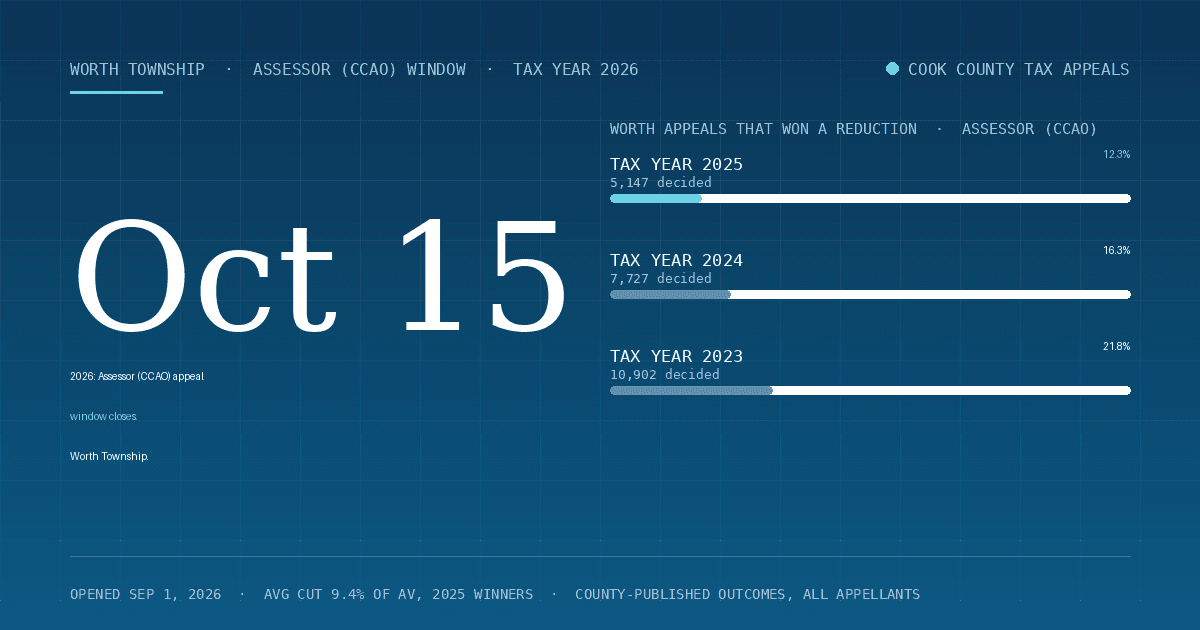
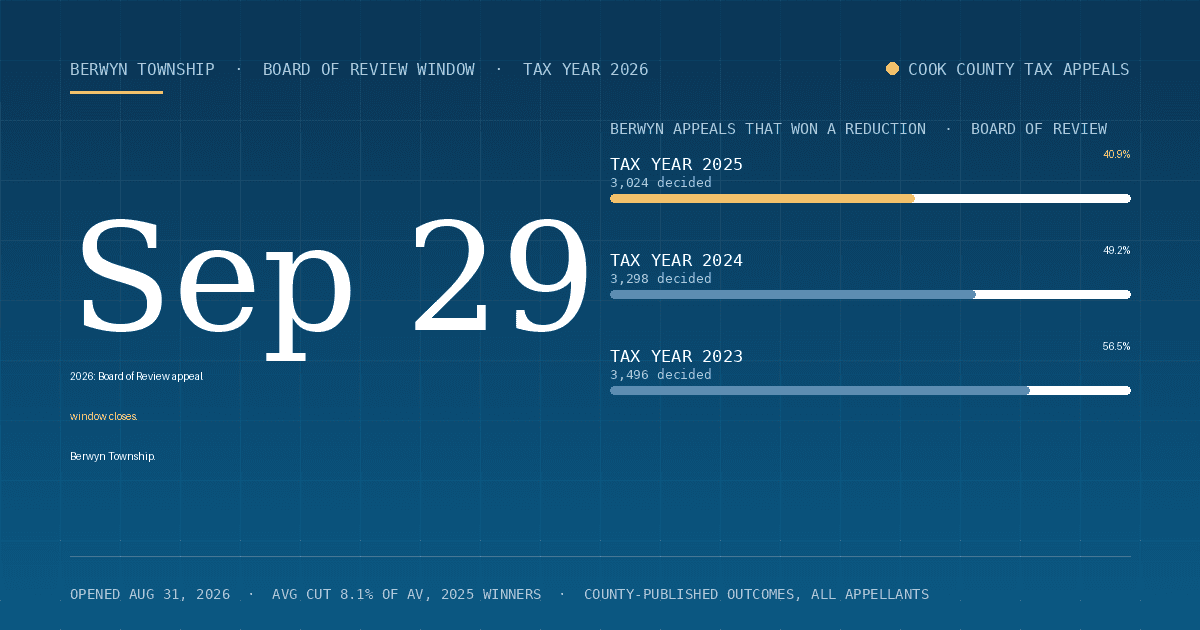
Cook County gives owners two separate appeals each year: the Assessor, then the Board of Review, on separate township windows. The Board looks at the case fresh, and it has historically granted reductions more often than the Assessor. A service that files at only one venue leaves the other chance on the table. Ask whether both are included, and whether an appeal to the Property Tax Appeal Board is an option if the Board of Review says no.
4. What evidence will they file?
A residential appeal is won on comparables: similar homes that the county itself assesses lower, or recent sales that show the value is too high. Ask how they pick comparables and whether you will see them before filing. A weak comparable is worse than none. For commercial and income property, ask whether they will argue from rent rolls, leases and operating statements, because that is the evidence those cases turn on.
5. Who does the work, and are they attorneys?
Ask who prepares the case and who you can call. If the company says it is a law firm, you can check any Illinois lawyer's license on the Attorney Registration and Disciplinary Commission's lawyer search at iardc.org. Ask whether the person reviewing your case has handled your kind of property: a condo, a two-flat and a strip center are three different exercises.
6. Will they tell you when there is no case?
Not every property is over-assessed. A company that files for every address it mails is filing some appeals it expects to lose. Ask whether they look at the numbers first and tell you when an appeal is not worth making.
7. Do they watch the deadline for you?
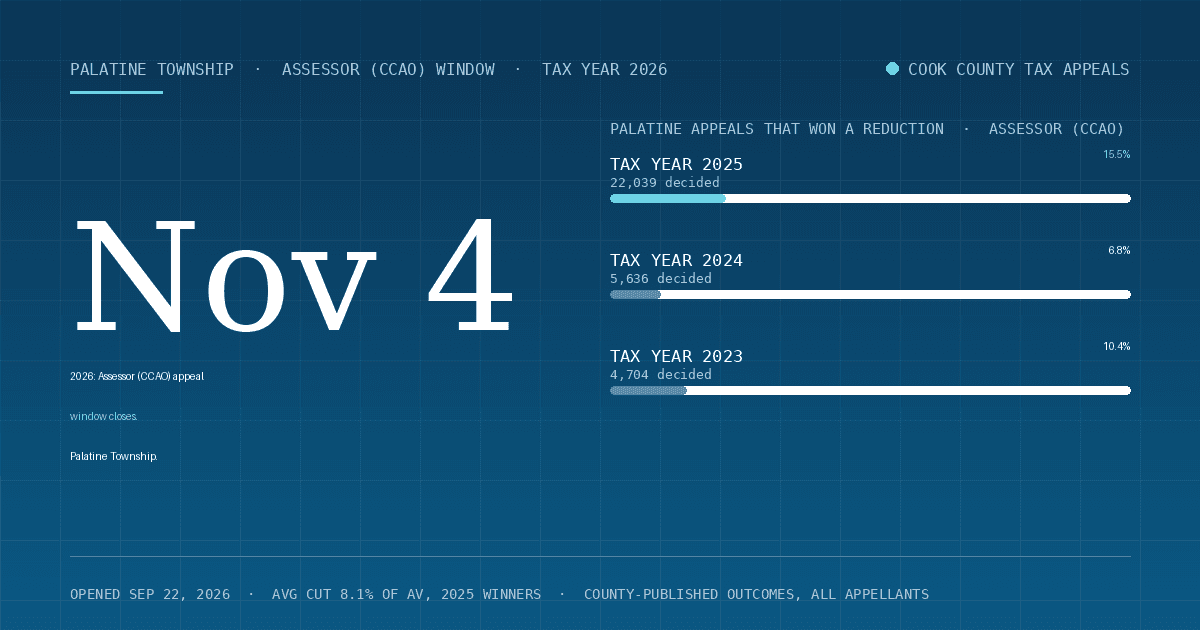
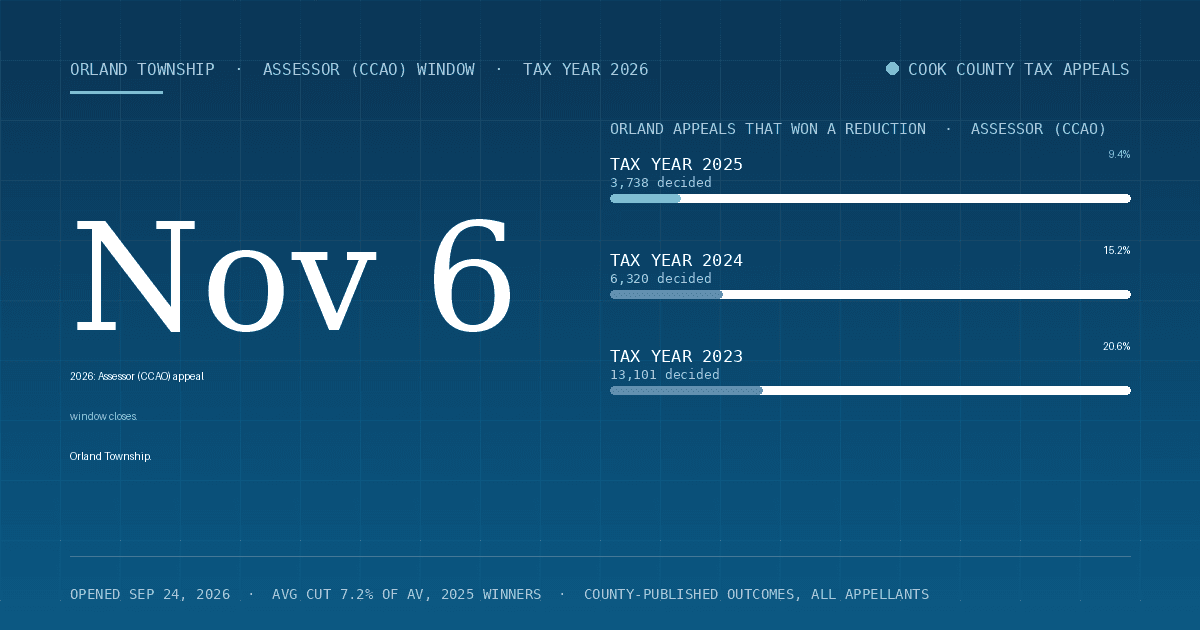
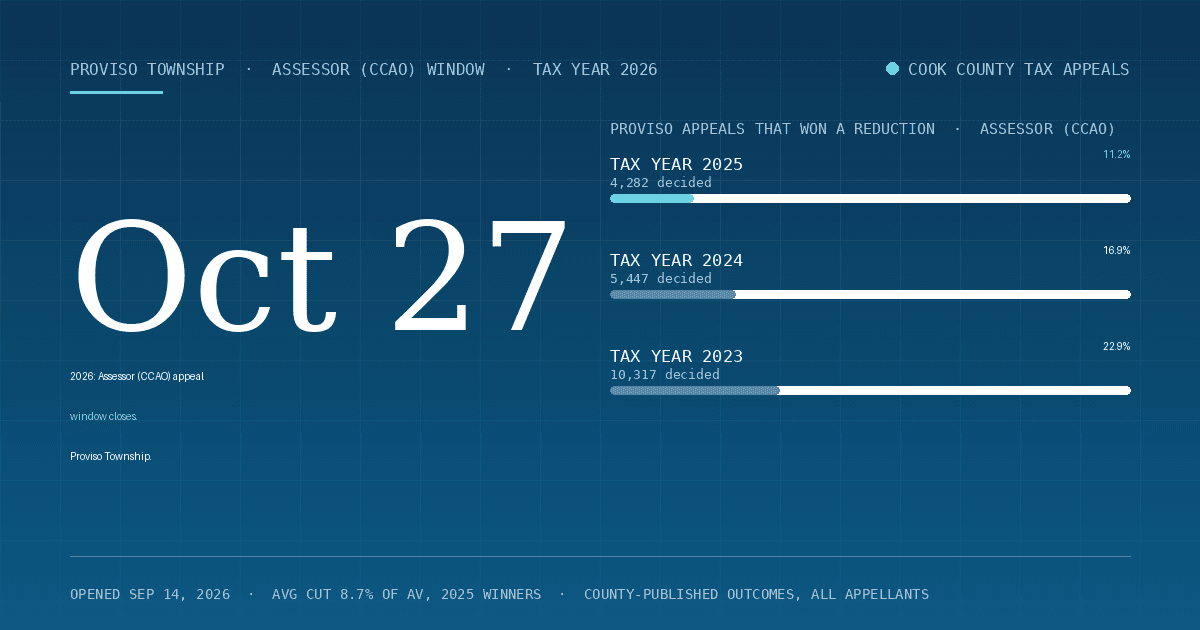
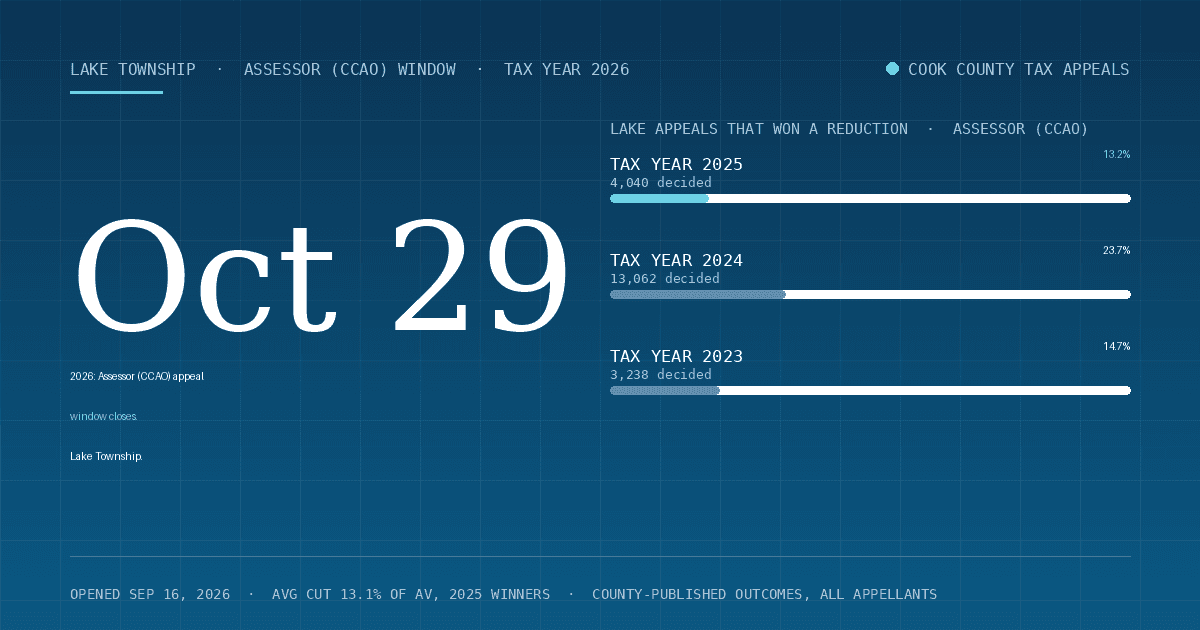
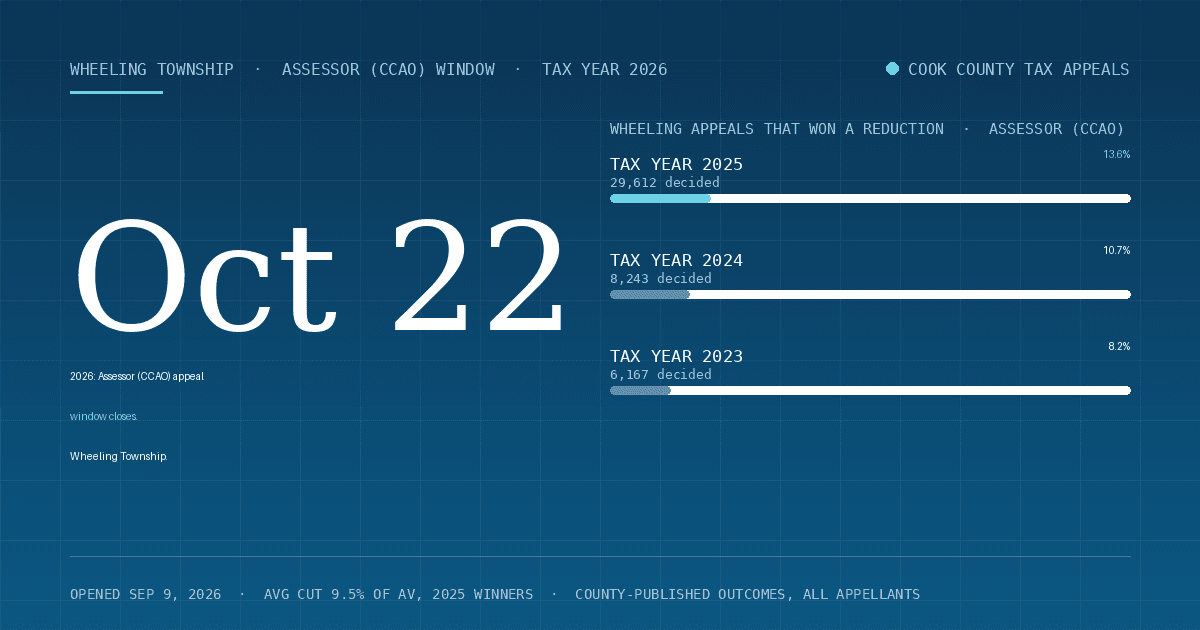
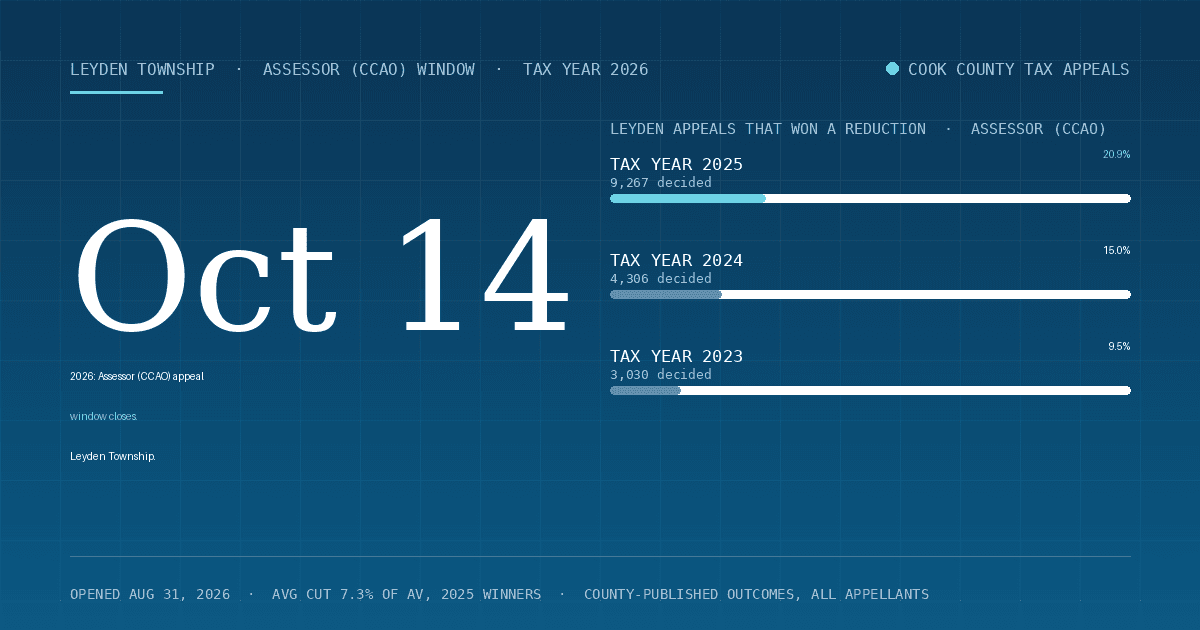
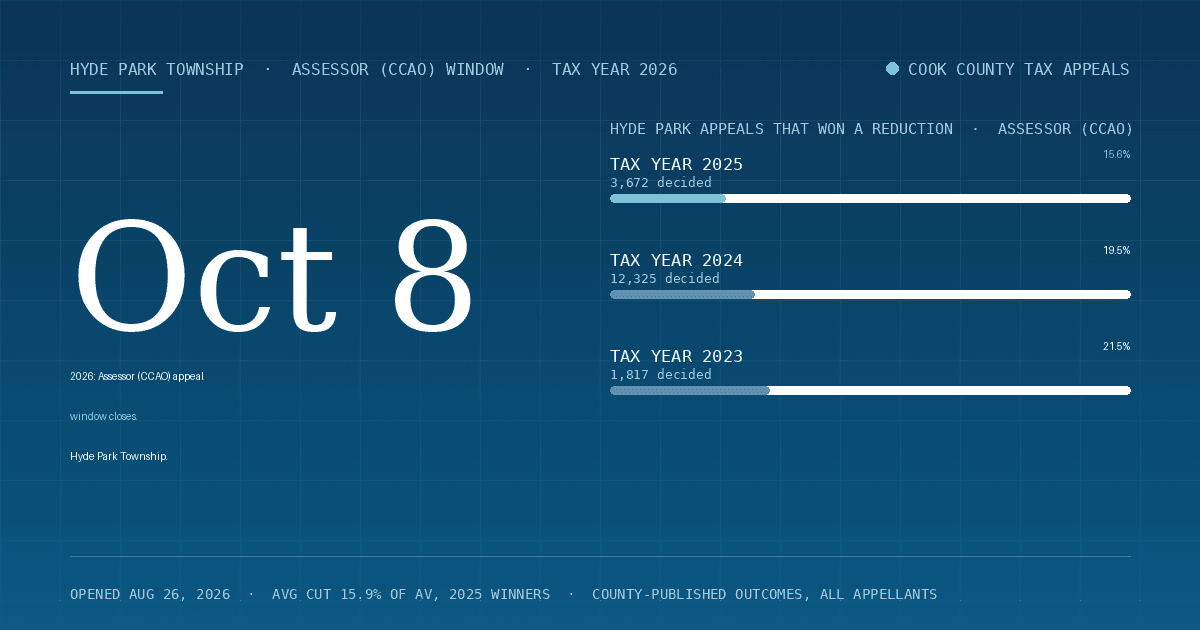
Cook County has no single deadline: each of 38 townships has its own window at each venue, and a missed window generally cannot be reopened. Ask how they track your township's dates, and whether they file again the following year if the value stays too high. Current windows are on the deadlines page.
A quick checklist
| Ask | A good answer |
|---|---|
| Fee | A stated percentage of a stated number of years' savings, in writing |
| No savings | No fee |
| Venues | Assessor and Board of Review, with a view on PTAB |
| Evidence | Comparables or income data you can see before filing |
| People | A named person, and an attorney you can look up |
| No case | They tell you so |
| Deadlines | They track your township and file every year it is worth it |
How we answer them
We are a Cook County property tax law firm. Our fee is 25% of the first year's tax savings, with no upfront cost and nothing owed if there is no reduction. We file at the Assessor and the Board of Review for homes and commercial property across all 38 townships, and every case runs through a valuation model built by Hani Khatib, a property tax attorney and CPA, who reviews any case that falls outside it. If the numbers show no case, we say so. Enter your address to see where your property stands, or read when a property tax attorney is worth it.