A property tax attorney represents Chicago and suburban Cook County property owners in challenging the assessed value the county has placed on their property. In Cook County that means filing at the Assessor's office, at the Board of Review, and — where the county's decision is still wrong — at the Illinois Property Tax Appeal Board or in circuit court. The assessment is the one input to your tax bill that can be contested; the tax rate and the state equalization factor are set elsewhere and are not open to challenge.
What the county's own outcomes actually show
These are county-published results for every Cook County appellant — represented or not, ours and everyone else's. They are not this firm's results. Each appeal counts once, even when it covers many parcels, such as a condominium building's units.
| Venue | Appeals decided | Received a reduction | Avg. cut (of AV, winners) |
|---|---|---|---|
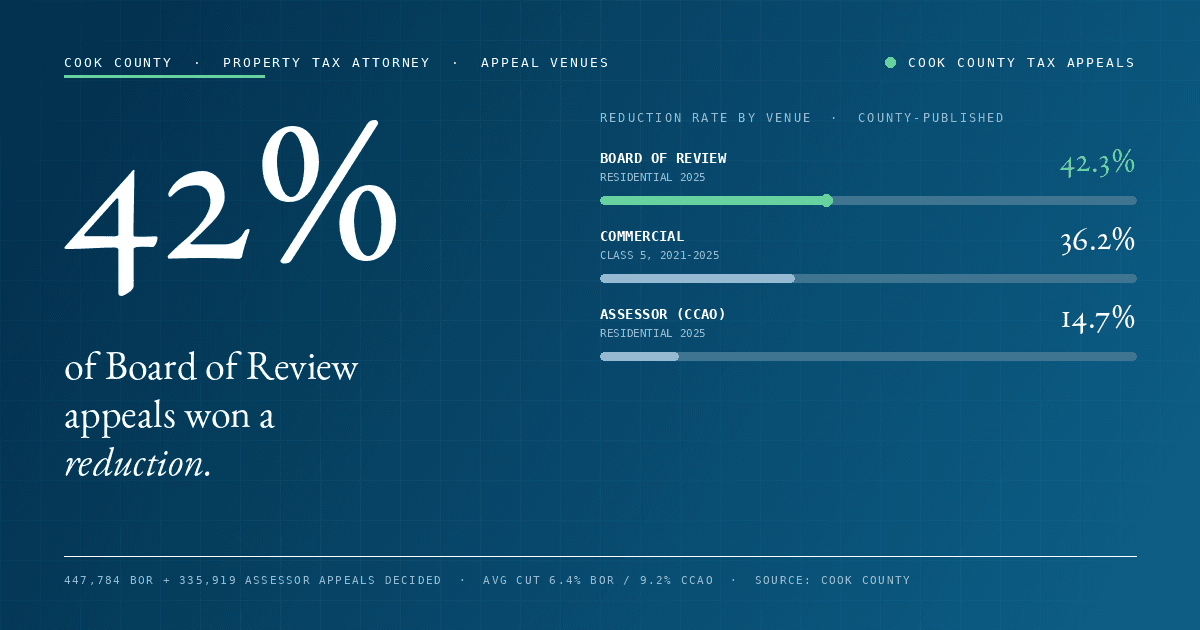
| Board of Review, residential, 2025 | 254,531 | 128,024 (50%) | 7.7% |
| Assessor, residential, 2025 | 182,775 | 32,961 (18%) | 7.9% |
| Commercial (Class 5), 2021–2025 | 184,186 | 65,796 (36%) | 22.5% |
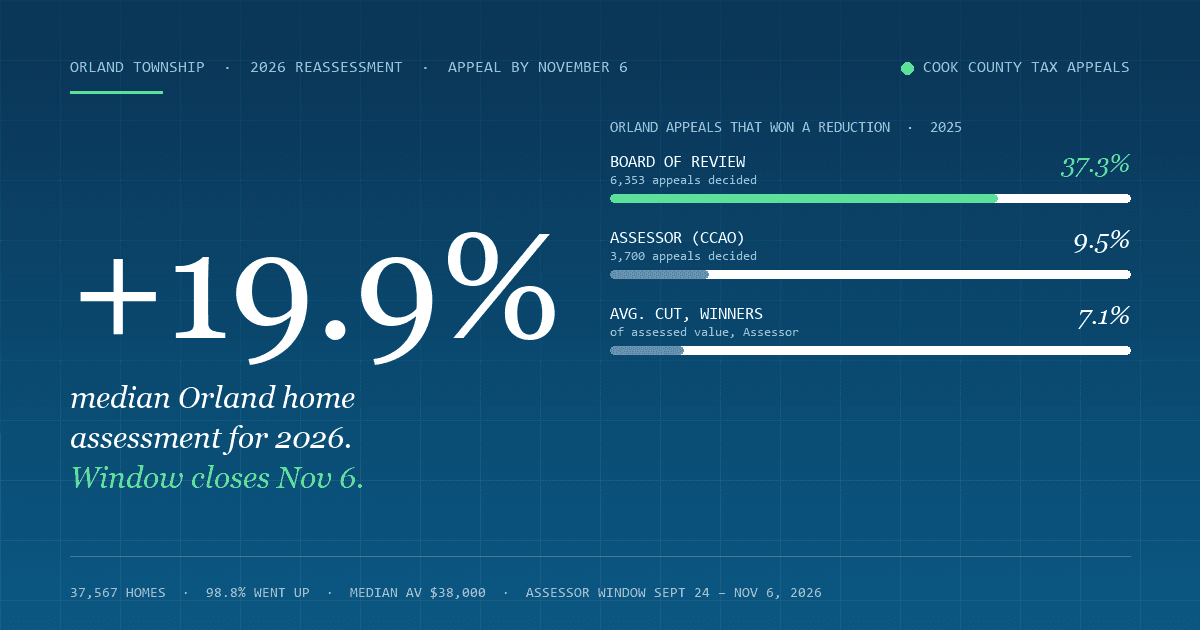
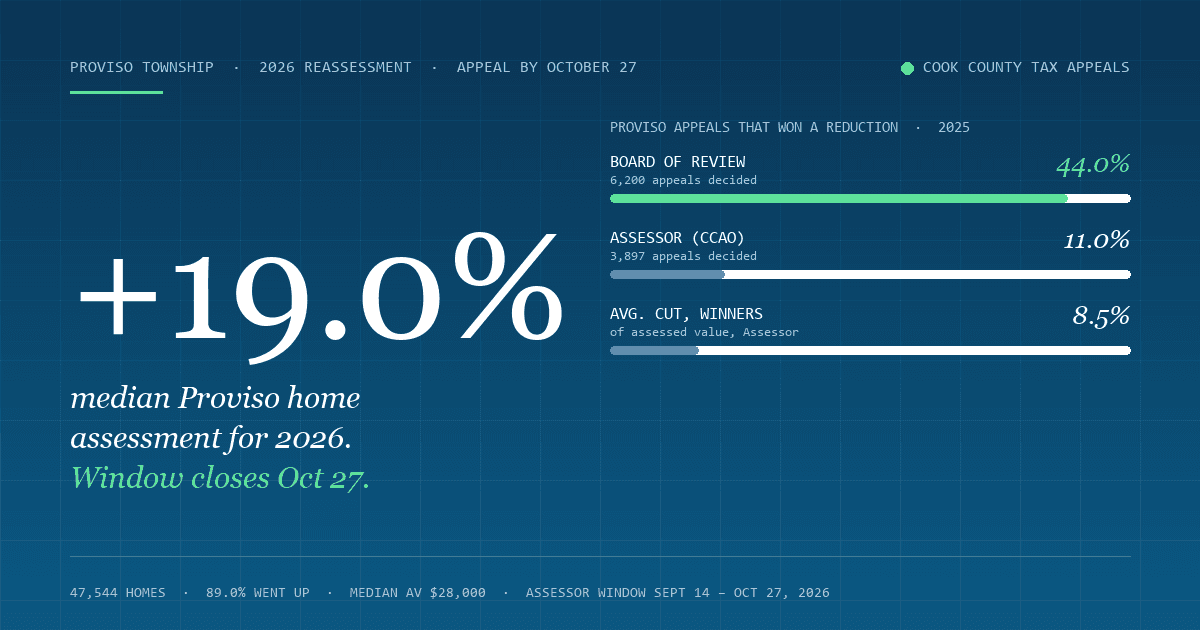
The two venues differ most in how often they say yes, and that is the single most useful thing to understand before filing. The Board of Review reduced about half of the residential appeals it decided in 2025; the Assessor, fewer than one in five. When either grants a reduction, the average cut is similar, a little under 8% of assessed value. So the Board of Review is not a formality after the Assessor: it is where most residential reductions come from, and it decides the case fresh.
Commercial property is a different exercise again: reductions are granted in roughly a third of decided appeals, and the average successful cut is nearly three times the residential figure (22.5% against 7.8% of assessed value) — because commercial value turns on income and expense evidence rather than on comparable sales.
Do you need a property tax lawyer to appeal?
No. An individual homeowner may file a Cook County assessment appeal without counsel, and many do — hundreds of thousands of appeals are filed each year. If your case is a straightforward uniformity argument on a single-family home and you have the time to assemble comparables and meet the deadline, filing yourself is a reasonable choice.
Representation tends to matter when the case stops being simple:
- Income-producing property. Commercial, industrial and multi-unit residential appeals are argued on rent rolls, leases and operating statements. The evidence is different in kind from residential comparables, and the amounts at stake are larger.
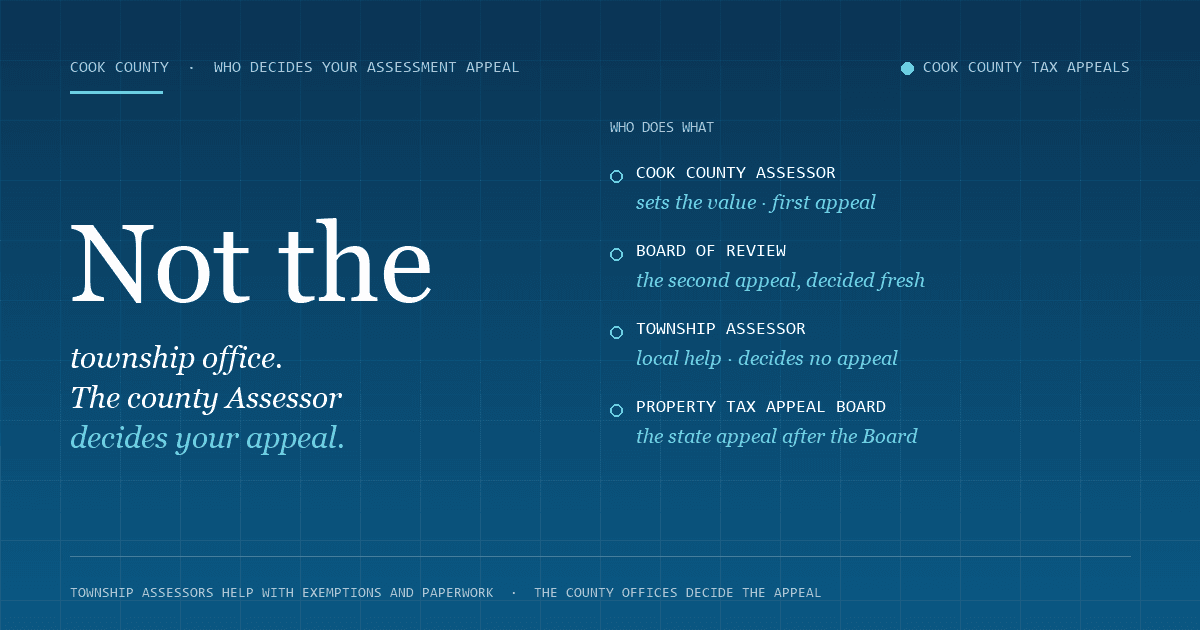
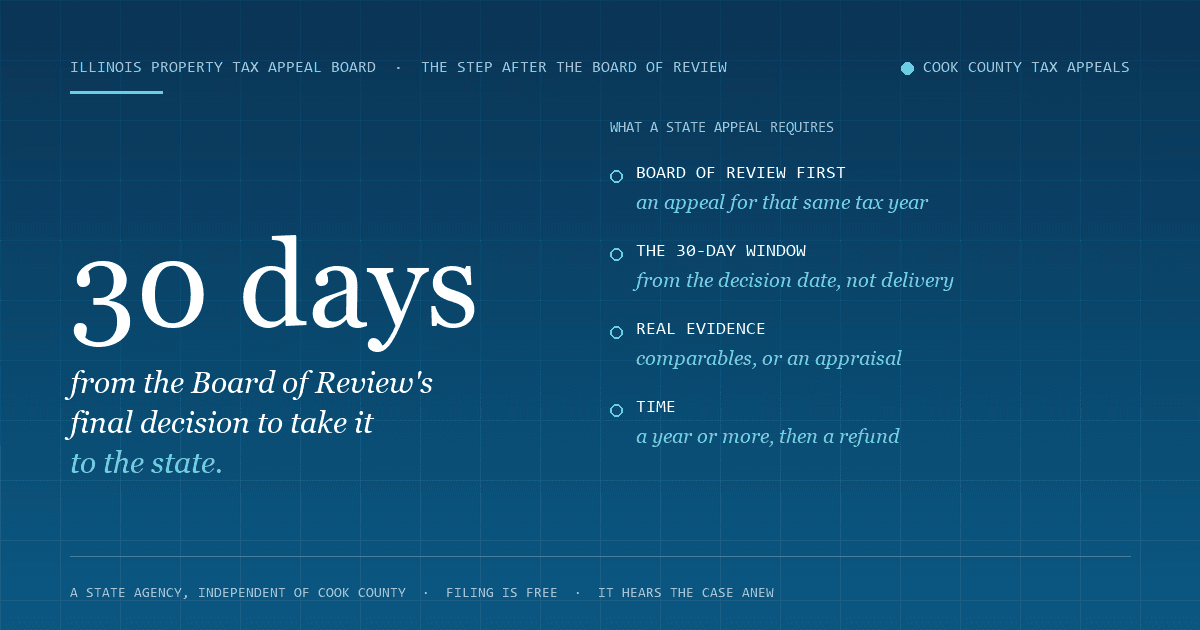
- The county said no and you think it was wrong. A denial at the Assessor is not the end. The Board of Review is an independent second review, and beyond it the Property Tax Appeal Board and the courts. Each has its own rules, forms and evidentiary expectations.
- Something in the record is wrong. Square footage, room count, condition, a finished basement that does not exist — factual errors in the county's property record require documentation to correct, and they persist until someone corrects them.
- Ownership is an entity, or the property is held in trust. Filing requirements differ, and who may appear on behalf of an owner is not always the owner.
- You own several parcels. Each PIN has its own assessment, its own township window and its own bill.
The deadline is the part people lose on
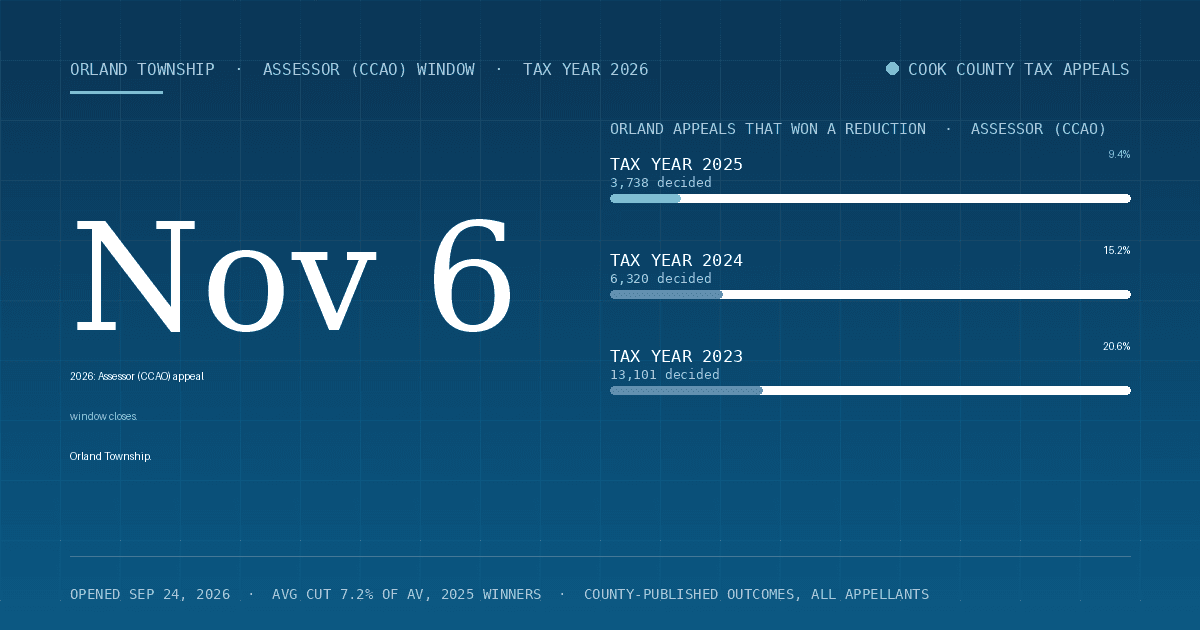
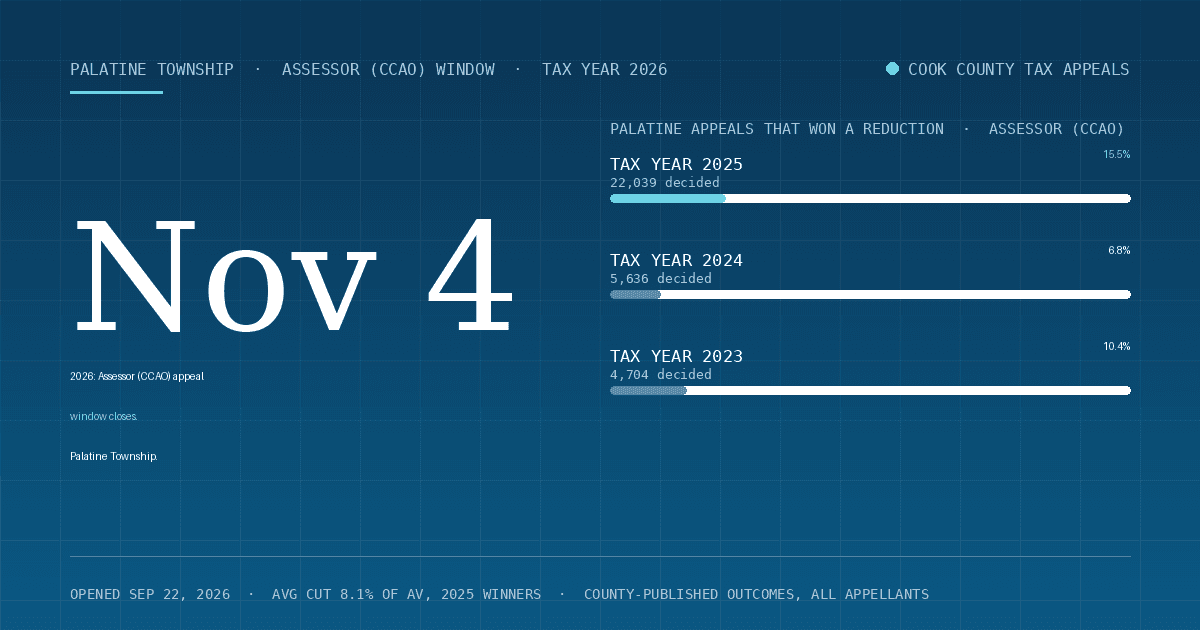
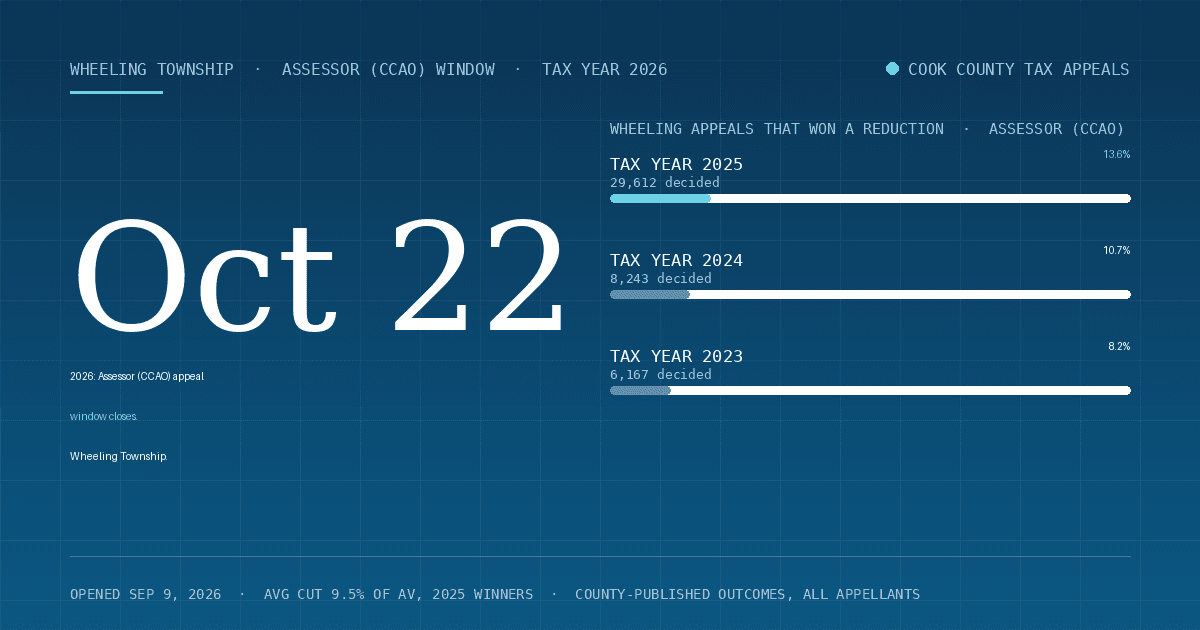
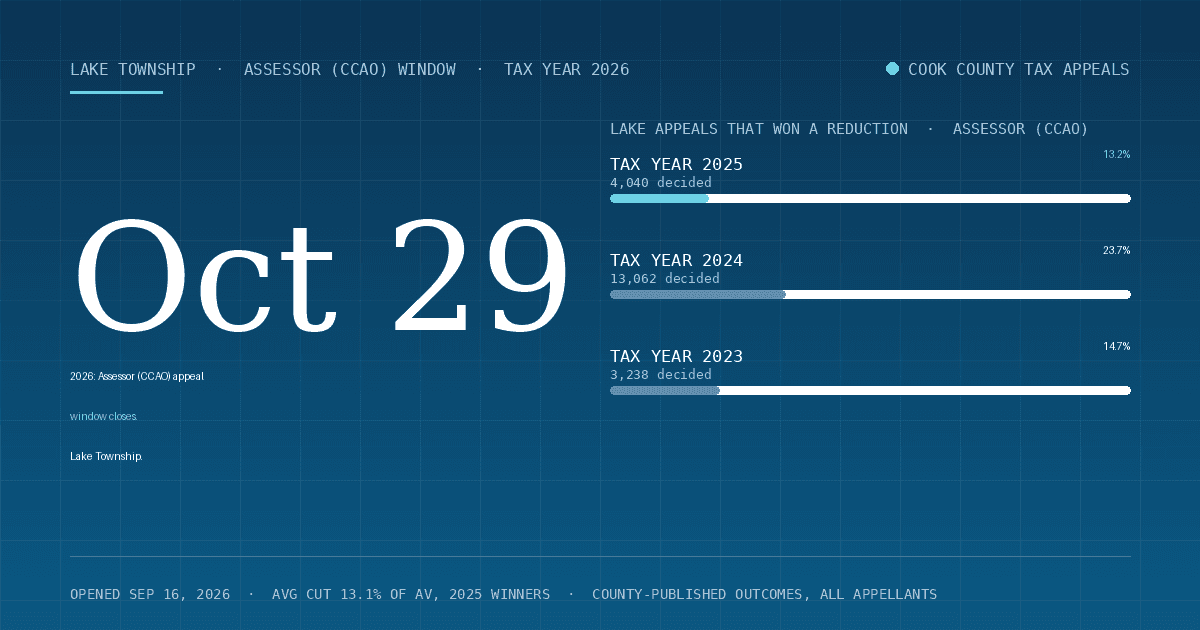
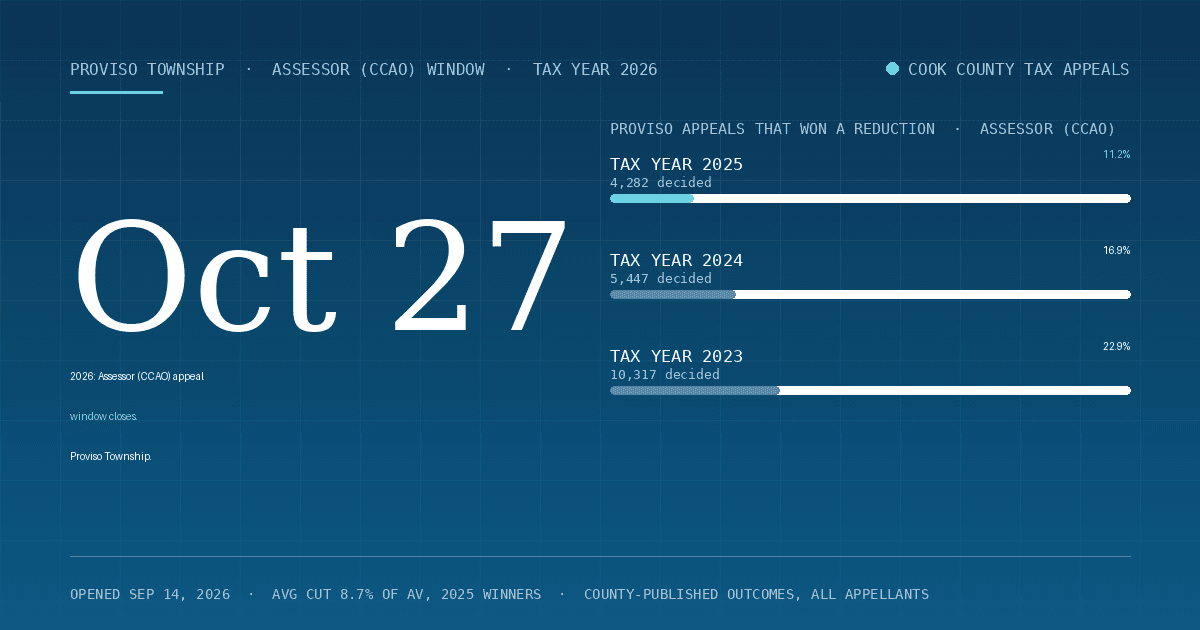
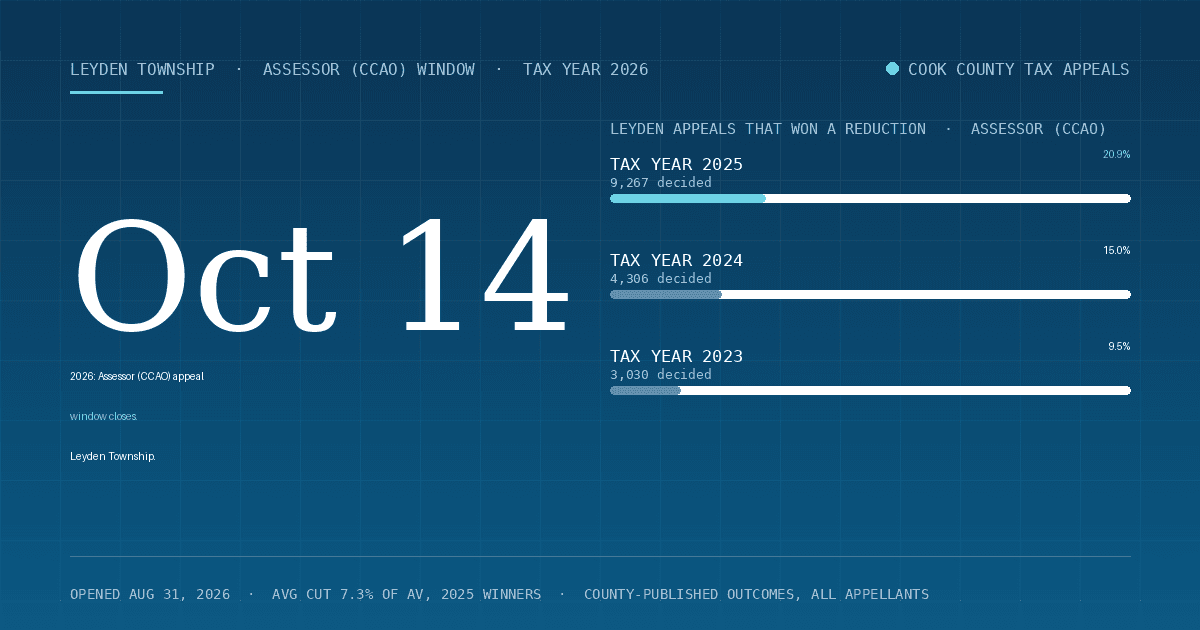
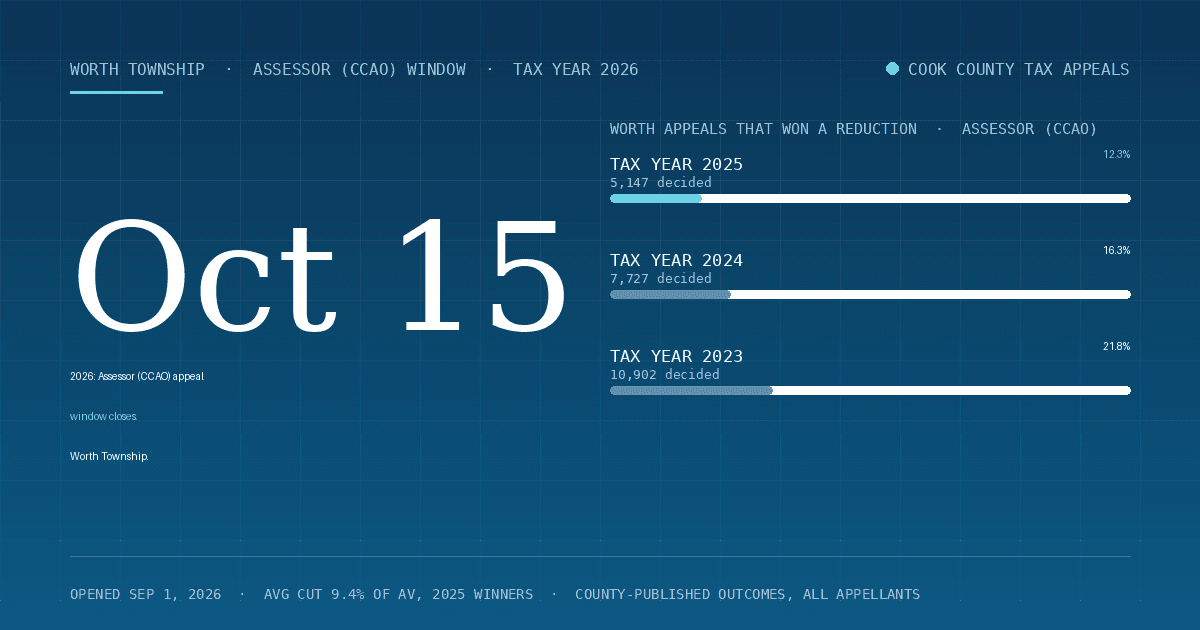
Cook County does not have one appeal deadline. It has a separate window for each of 38 townships, at each of two venues, and those windows open and close on their own schedule through the year. A township's Assessor window may close in June while its Board of Review window does not open until August.
A missed window generally cannot be reopened; in practice the remedy is the next available window. If both have passed for the year, that means carrying the assessment for another full cycle. In a reassessment year that assessment then carries forward for three years.
Check your township's current window before anything else. If it is open, the filing itself takes far less time than most people expect.
How an assessment becomes a tax bill
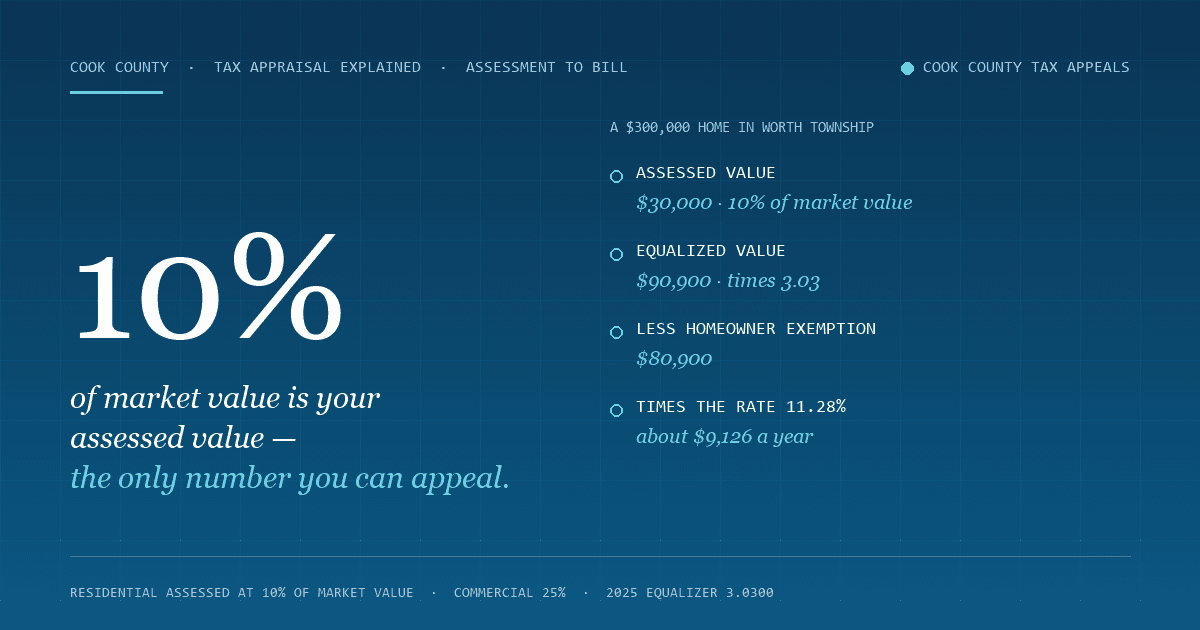
Three numbers produce your bill: the assessed value the Assessor placed on your property, the state equalization factor, and the local tax rate set by the taxing bodies where you live. You cannot negotiate the rate. The equalizer is set in Springfield. The assessed value is the only one of the three that can be challenged — and it is the one most likely to be wrong, because it is produced by a mass-appraisal model rather than by anyone visiting your property.
That is also why a successful appeal is worth more than one year's savings: the reduced assessment is the number that drives every subsequent bill until the next reassessment. See why Cook County bills rise and how assessed value differs from market value.
What an appeal cannot do
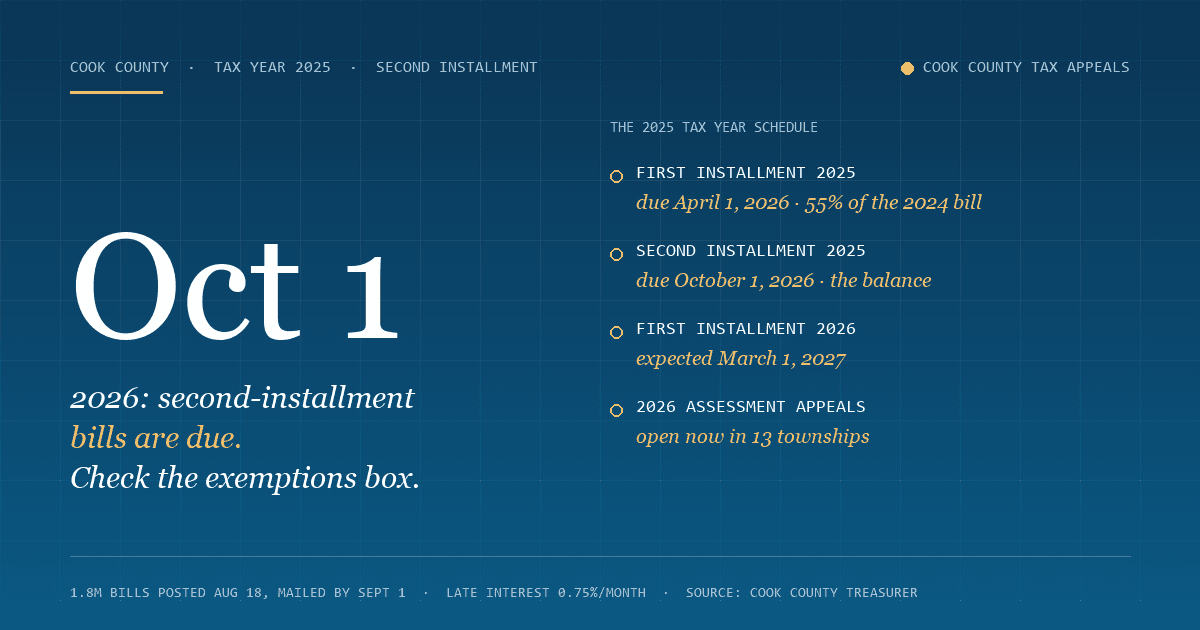
An appeal challenges your assessment, not your tax rate, not the equalizer, and not the total the taxing bodies levy. It does not pause a bill that is already due. And while increases are rare — across 2021 to 2025, roughly one in three thousand decided Cook County appeals ended in a higher assessment — they are not impossible, and anyone who tells you an assessment can only go down is overstating it.
What a property tax attorney costs
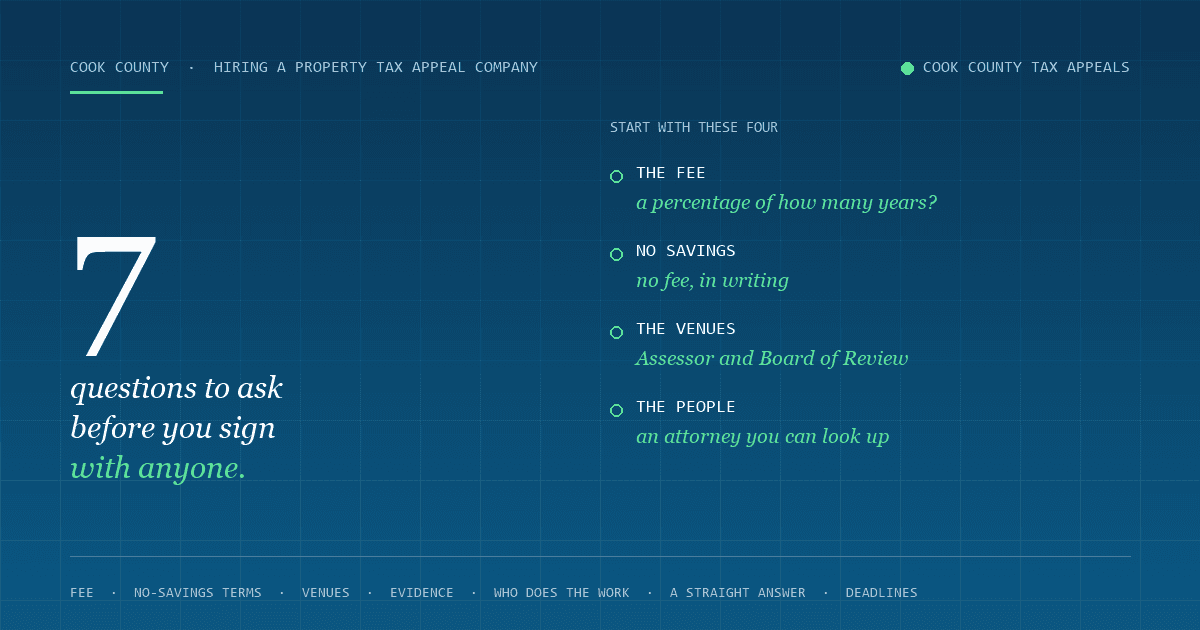
Fee arrangements differ, and the percentage is only half of a quote. Many appeal practices work on contingency: a share of the tax saved, and nothing if there is no reduction. Before you sign with anyone, ask what the percentage applies to (the first year's savings, or every year the lower value lasts), whether any fee is owed if nothing is saved, and whether both the Assessor and the Board of Review are included. Seven questions to ask an appeal company sets these out.
This firm charges 25% of the first year's tax savings, with no upfront cost and nothing owed if there is no reduction.
Working with this firm
Cook County Tax Appeals is a contingency-fee practice: there is no upfront cost, and a fee arises only from a reduction actually obtained. We handle residential and commercial appeals at the Assessor and the Board of Review across all Cook County townships, and we are attorneys — the firm is led by Hani Khatib, a property tax attorney who is also a CPA with an LL.M. in taxation, and every appeal runs through a valuation model he built.
Practical next steps:
- Confirm your township's window is open.
- Run your own numbers in the Cook County property tax calculator to see what a reduction would be worth on your parcel.
- Read how the appeal process runs end to end, and the signs that a property is over-assessed.
- If a reduction is granted after taxes have been paid, a refund may follow.
Deeper background on each venue: the Assessor's appeal process and the Board of Review.
Questions about hiring a property tax attorney
How much does a property tax attorney cost in Cook County?
It depends on the firm. Contingency fees, a percentage of the tax saved, are common; this firm's is 25% of the first year's savings, with nothing owed if there is no reduction. Compare quotes on what the percentage applies to, not only on the percentage.
Is a property tax lawyer worth it?
For a standard house with an obvious comparison, you can file yourself at no cost. A lawyer tends to earn the fee when the property produces income, the county has already said no, the record is wrong, the owner is an entity or a trust, or there are several parcels, as set out above.
Can a property tax attorney appeal to the Board of Review and the PTAB?
Yes. An attorney can represent an owner at the Assessor, at the Board of Review, at the Illinois Property Tax Appeal Board and in circuit court. The Board of Review decides the case fresh, whether or not you filed with the Assessor.
Do you handle appeals in Chicago and the suburbs?
Yes: homes and commercial property in all 38 Cook County townships, the City of Chicago and the suburbs, at the Assessor and the Board of Review. Our office is in Palos Heights, and appeals are filed online, so where in the county you live does not matter.