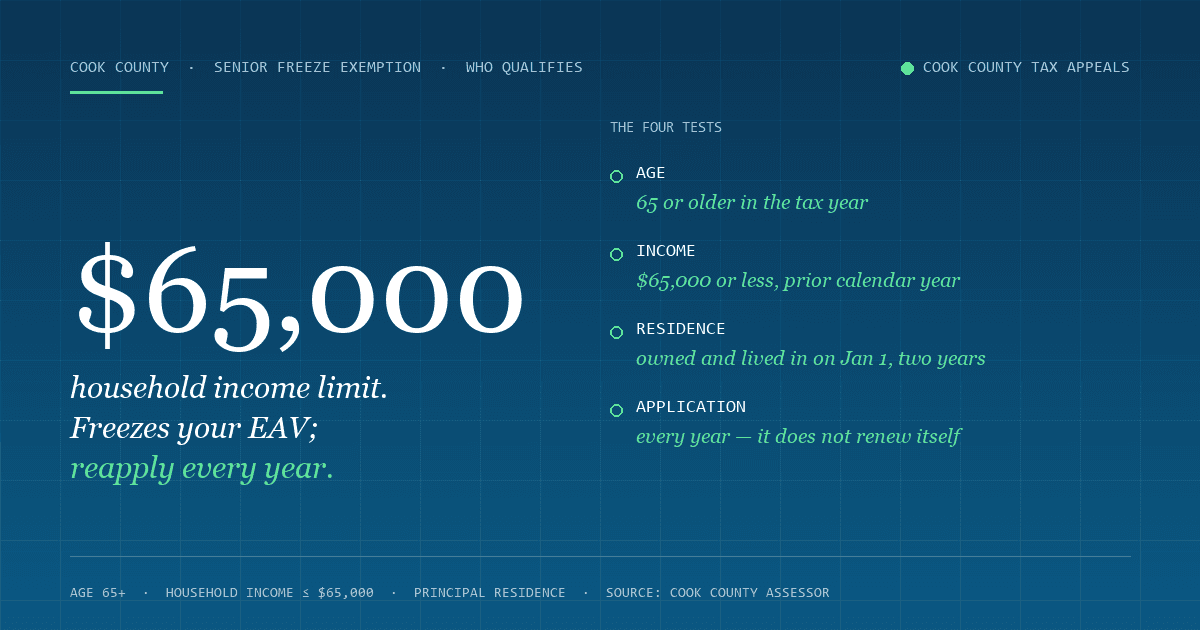
The Senior Freeze (formally the Low-Income Senior Citizens Assessment Freeze Homestead Exemption) locks a qualifying homeowner's equalized assessed value at the level of a base year, so later reassessments cannot raise the taxable value. It is the most valuable exemption a Cook County senior can hold in a reassessment year, and the one most often lost, because unlike the Senior Exemption it must be applied for every year.
Who qualifies
- Age: 65 or older during the tax year. For the 2025 tax year, born in 1960 or earlier.
- Income: total household income of $65,000 or less for the prior calendar year (2024 income for the 2025 tax year). Household means everyone living in the home, and income includes Social Security, pensions, wages, interest and dividends.
- Residence: you owned, or had a legal or equitable interest in, the home and lived in it as your principal residence on January 1 of the tax year and of the year before.
- A separate exemption: the Freeze is its own application, apart from the Senior Exemption, and a qualifying senior can hold both.
What it does, and does not, do
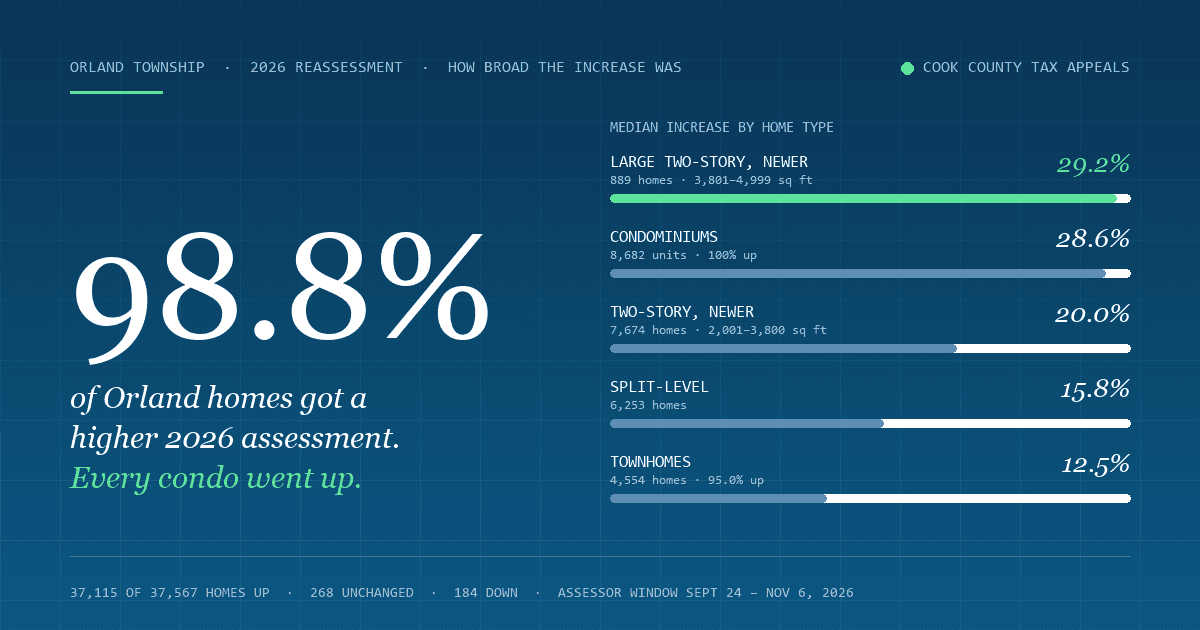
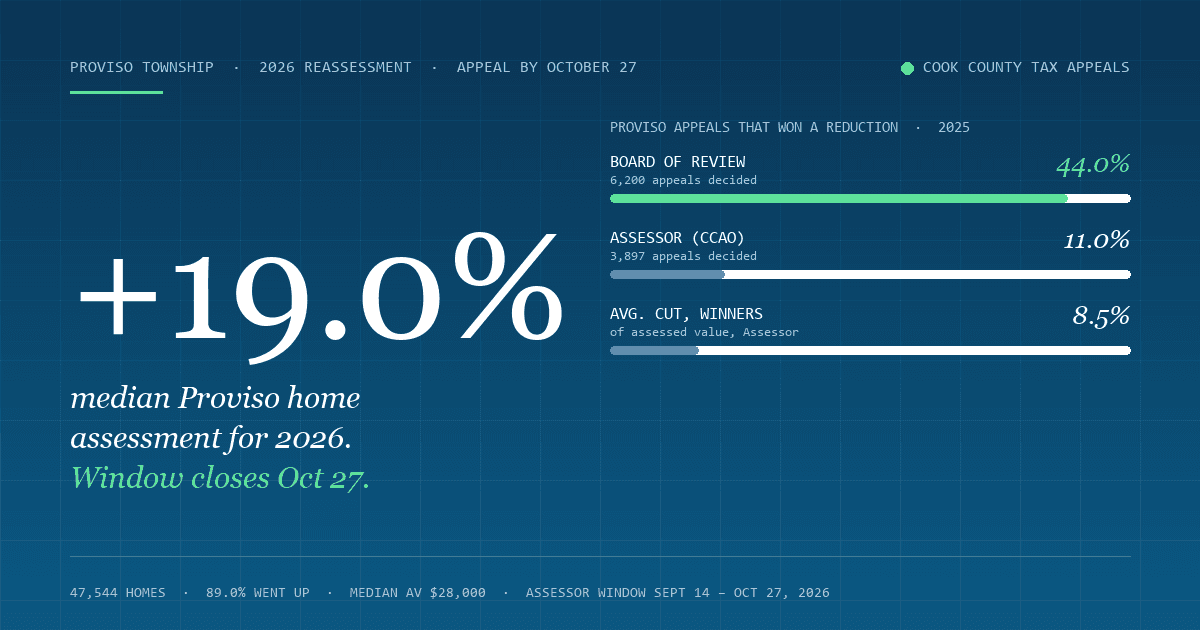
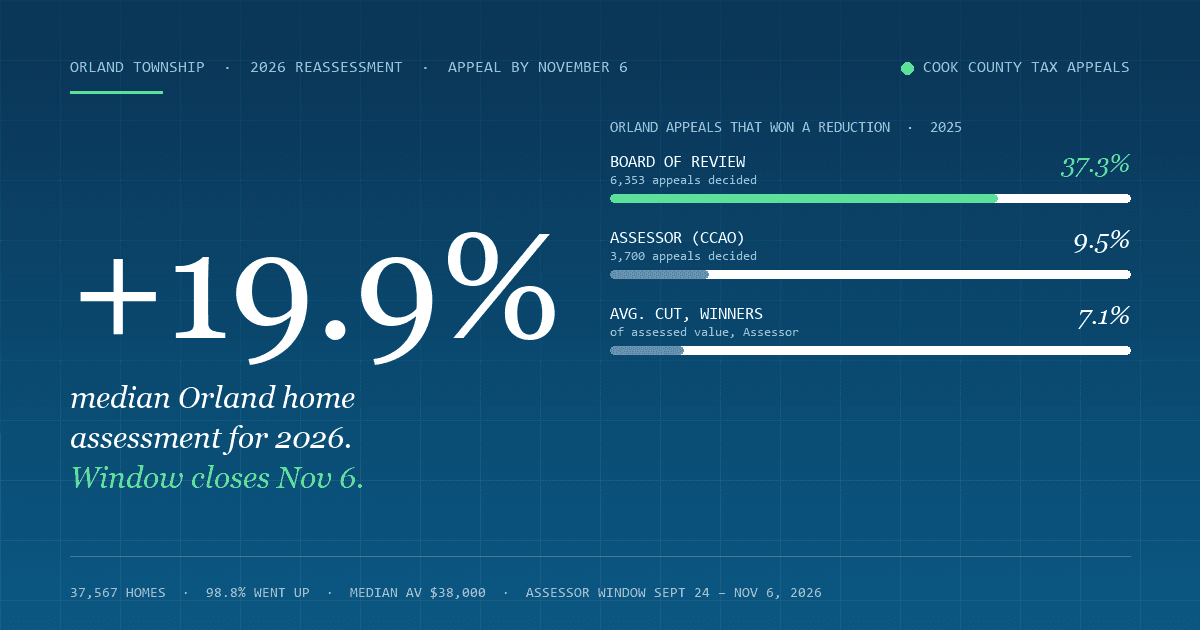
It freezes the equalized assessed value, the number the tax rate is applied to, at the base-year level. Your bill can still rise if the tax rate rises, because the Freeze does not freeze levies, and it can fall if the rate falls. It does not reduce the value below the base; it stops it climbing. In a reassessment year like 2026 in the south and west suburbs, where median assessments rose 20–27%, a senior on the Freeze keeps the old base while neighbors absorb the increase.
Stacked with the other senior relief: the Senior Exemption removes $8,000 of equalized value (no income limit, renews automatically once granted), the Homeowner Exemption removes $10,000, and the Freeze holds the remainder at the base year.
You must apply every year
The Assessor's rule is explicit: the Senior Freeze does not renew automatically, because it is income-tested; a new application with income documentation is required each year. The Senior Exemption and Homeowner Exemption renew on their own. Applications are filed with the Cook County Assessor, online or on paper, during the filing period the Assessor announces early each year. The 2025 filing period has closed; a senior who qualified and did not file can still apply through a Certificate of Error, and the Treasurer refunds the difference on bills already paid. See how a Certificate of Error works.
Freeze plus appeal: they work together
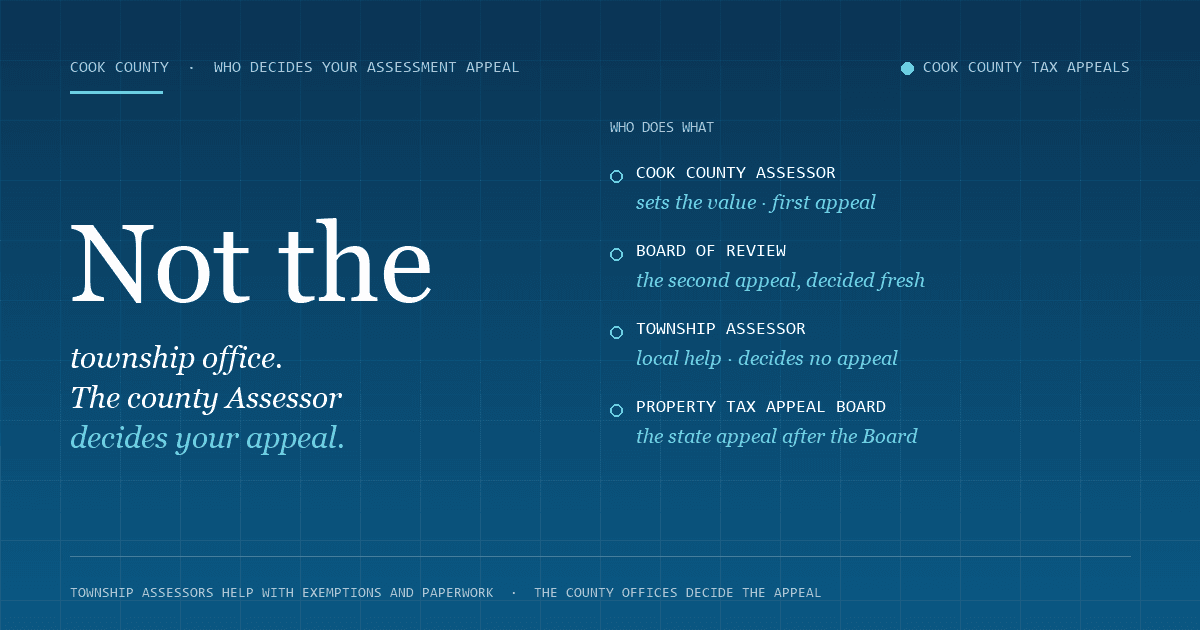
The Freeze holds your equalized value where it is. An appeal lowers the assessed value underneath it. The two are not alternatives: a senior on the Freeze whose home is assessed above comparable homes can appeal, and a successful appeal in a reassessment year lowers the value the Freeze is measured against. What an appeal cannot do is fix a missing exemption, and what the Freeze cannot do is correct an assessment that was already too high in the base year.
Checklist
- Confirm age, income for the prior year, and January 1 residence for both years.
- Look at the second-installment bill due October 1: the Senior Exemption and Senior Freeze print on it. If the Freeze is missing and you qualified, file a Certificate of Error.
- Diary the Assessor's filing period for the next tax year and file the Freeze application with proof of income every year.
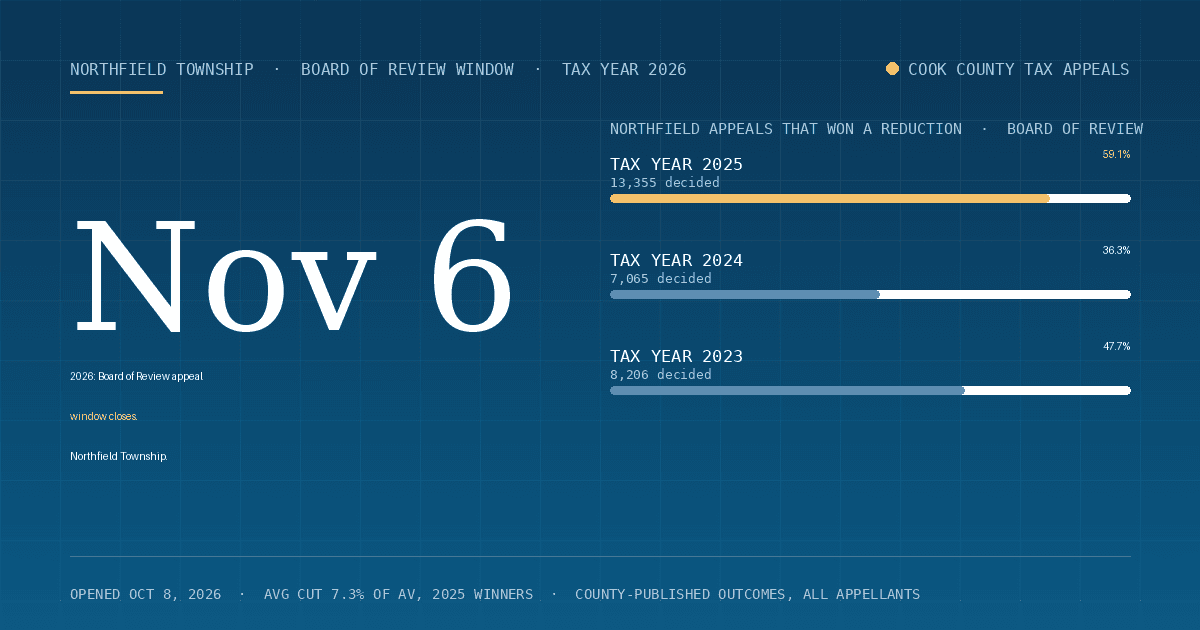
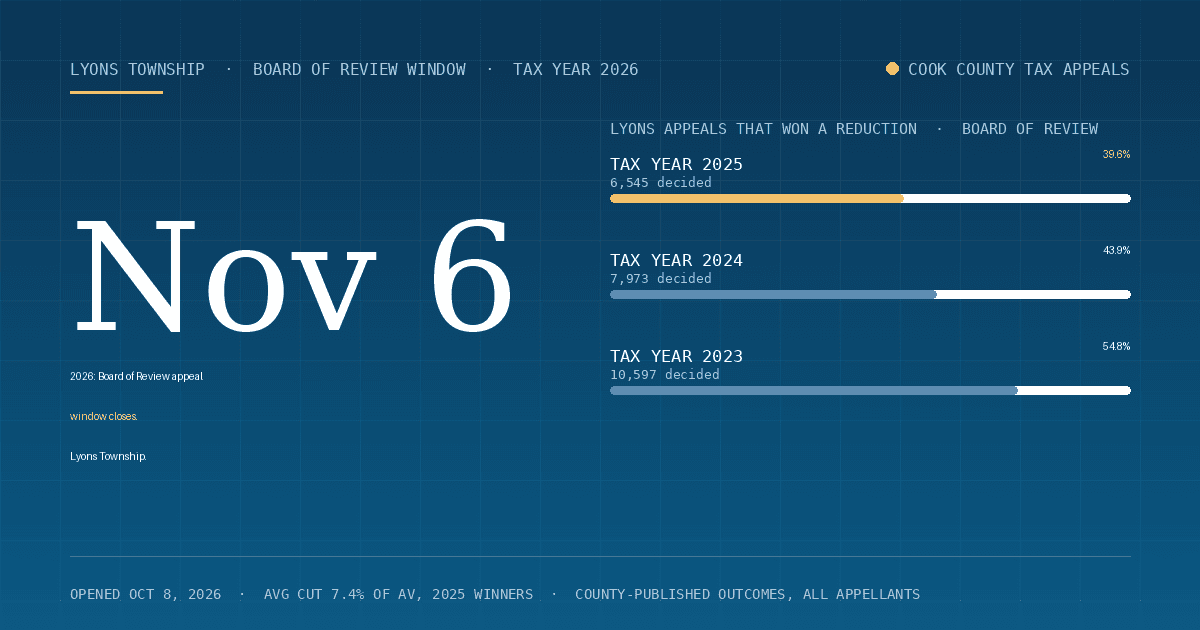
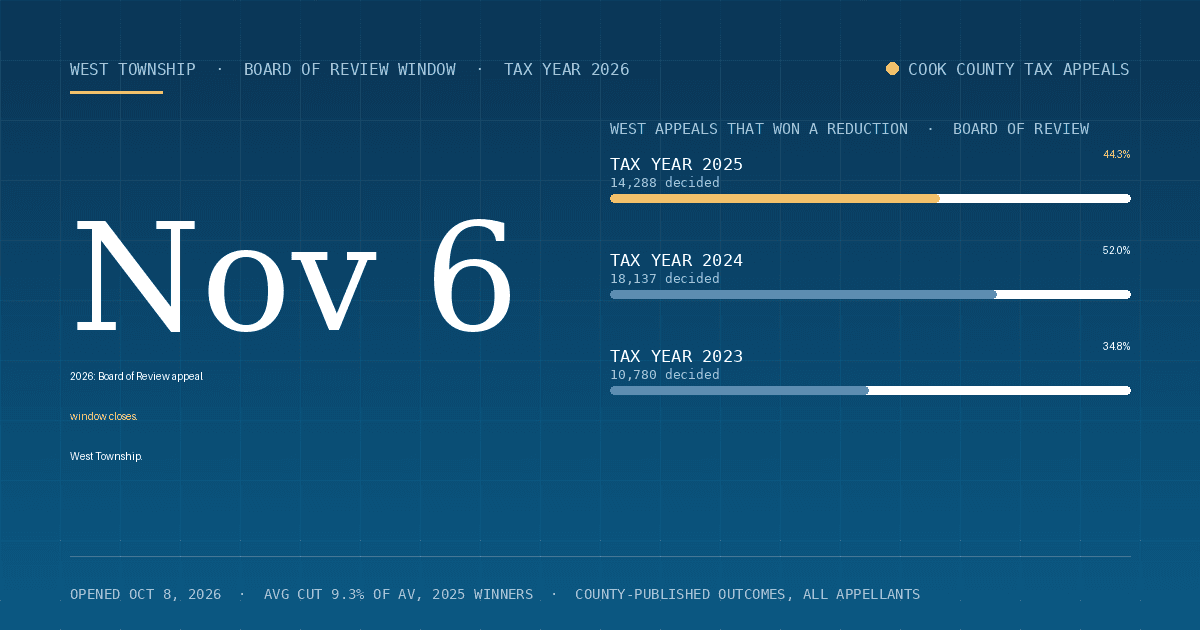
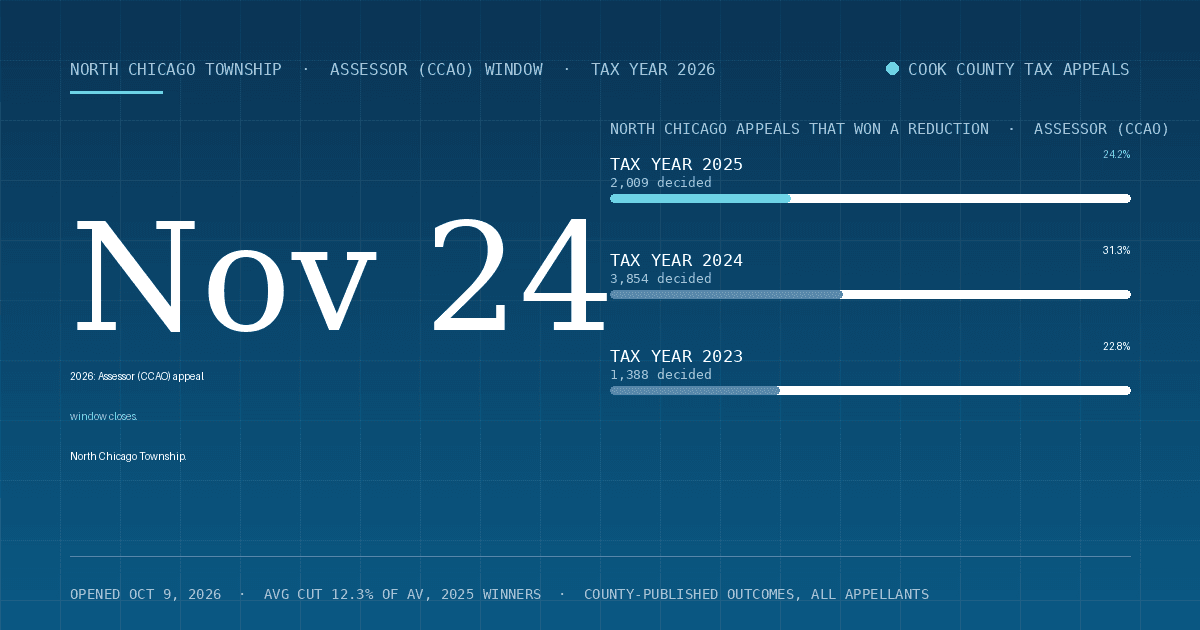
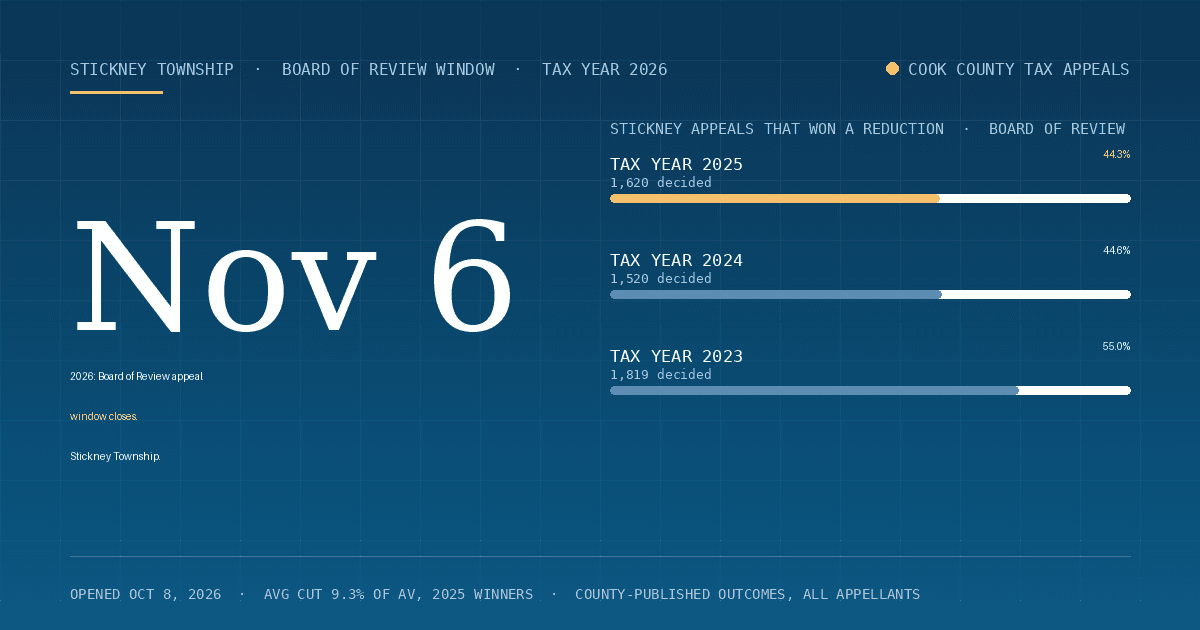
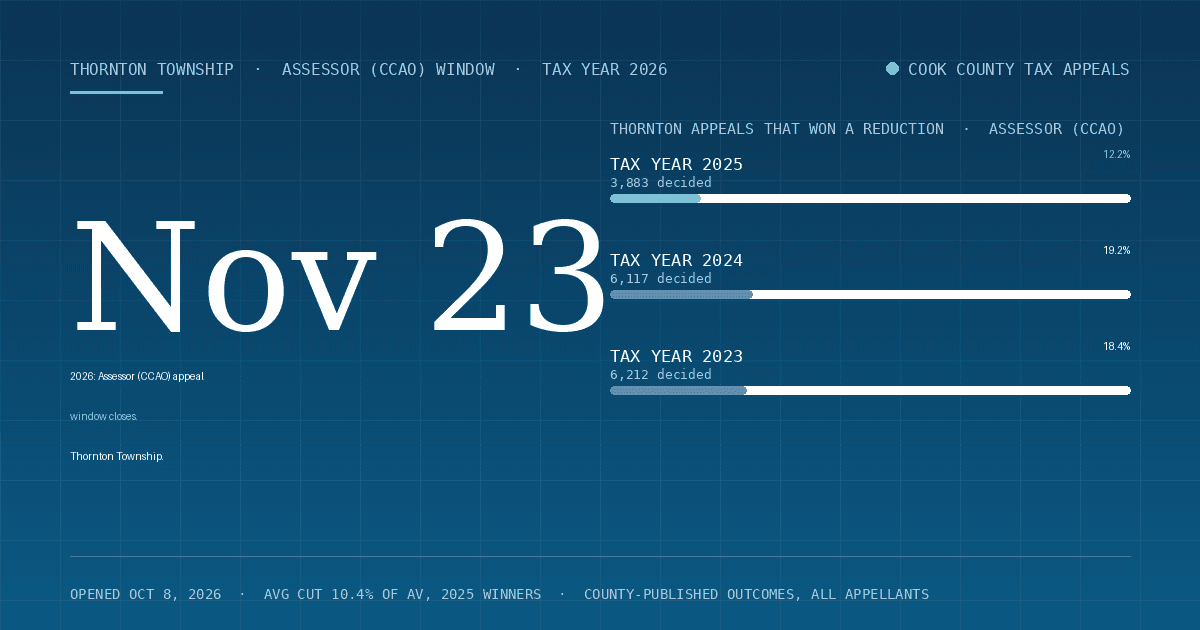
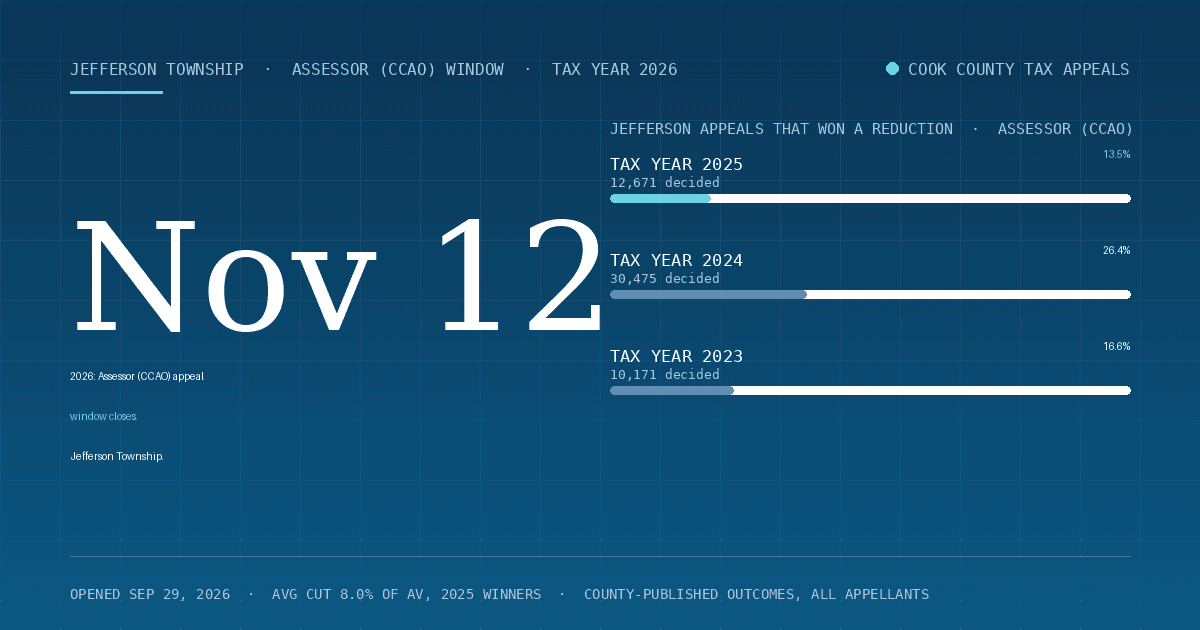
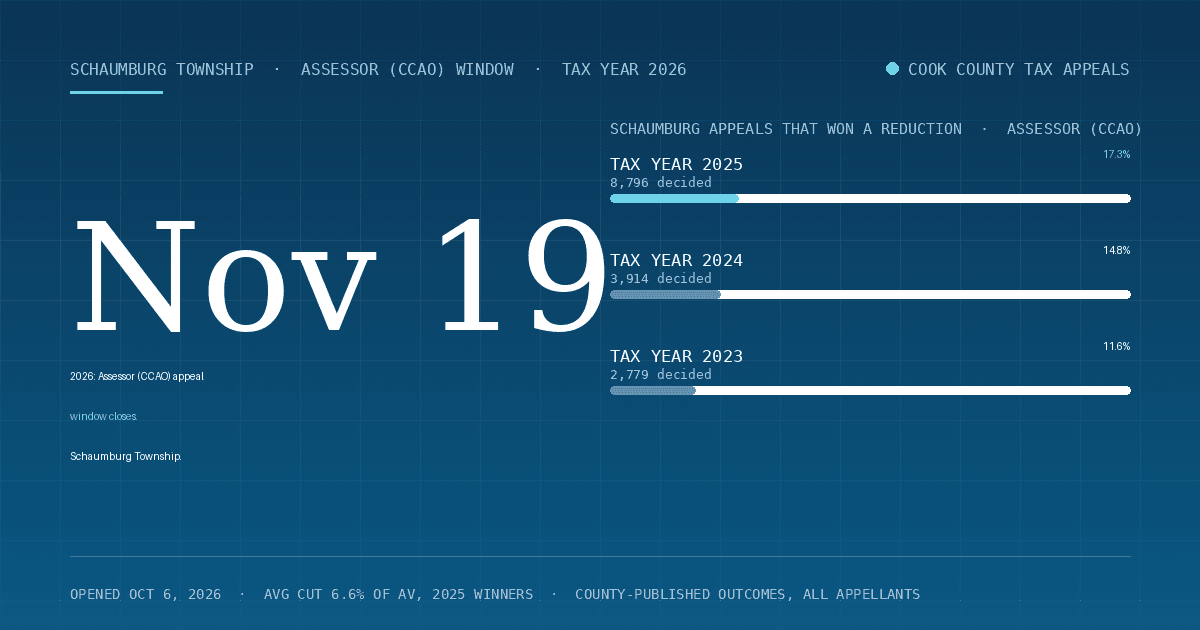
- In a reassessment year, check the assessment itself with the free property check and, if it is out of line with comparable homes, appeal before the township window closes.
Eligibility rules are from the Cook County Assessor's Senior Freeze page as of September 6, 2026. For the full picture of senior relief, including the Senior Exemption and how the programs stack, see Senior property tax relief in Cook County.