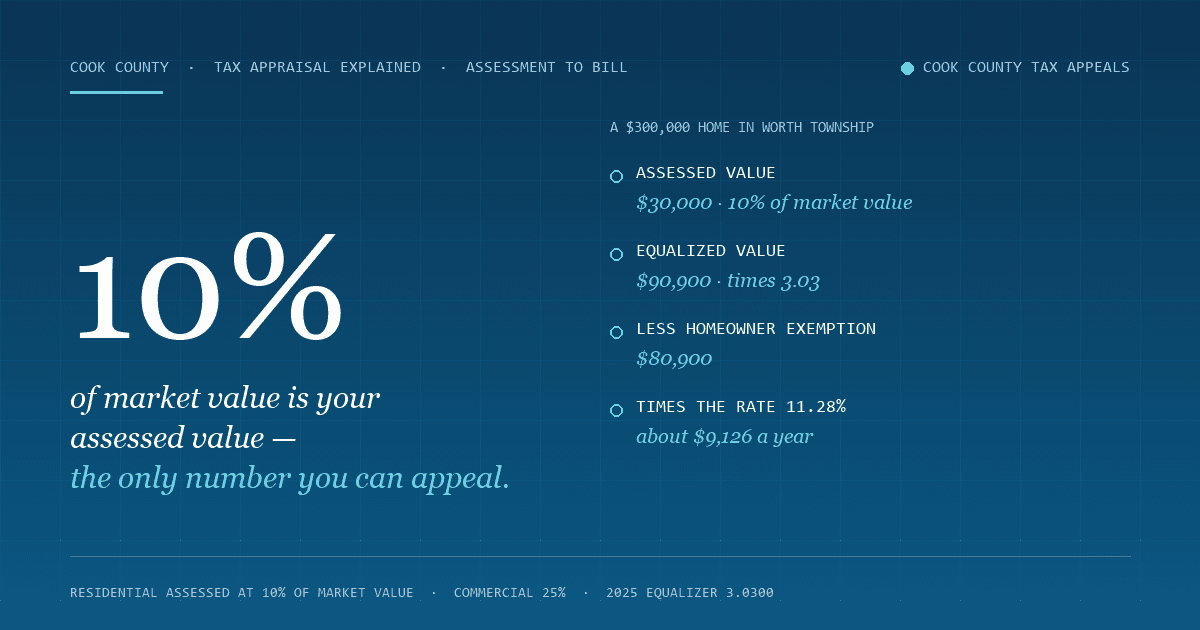
Cook County does not appraise your property for tax purposes; it assesses it. What most people mean by "tax appraisal" is the Assessor's assessed value, which for a home is 10% of the Assessor's estimate of market value, and for commercial and industrial property 25%. That number, not the market value, is what flows into your bill, and it is the only part of the bill you can challenge.
Where to find yours
Search the Cook County Assessor's site by 14-digit Property Index Number (PIN) or address. The property page shows the current assessed value split into land and building, the estimated market value it implies, the property characteristics the Assessor is using (square footage, age, bedrooms, basement, garage, exterior), the assessment history, and the exemptions on record. The same PIN on the Treasurer's site shows the bill, and our free property check shows the assessment history next to 20 years of bills and against comparable homes.
How the assessment is set
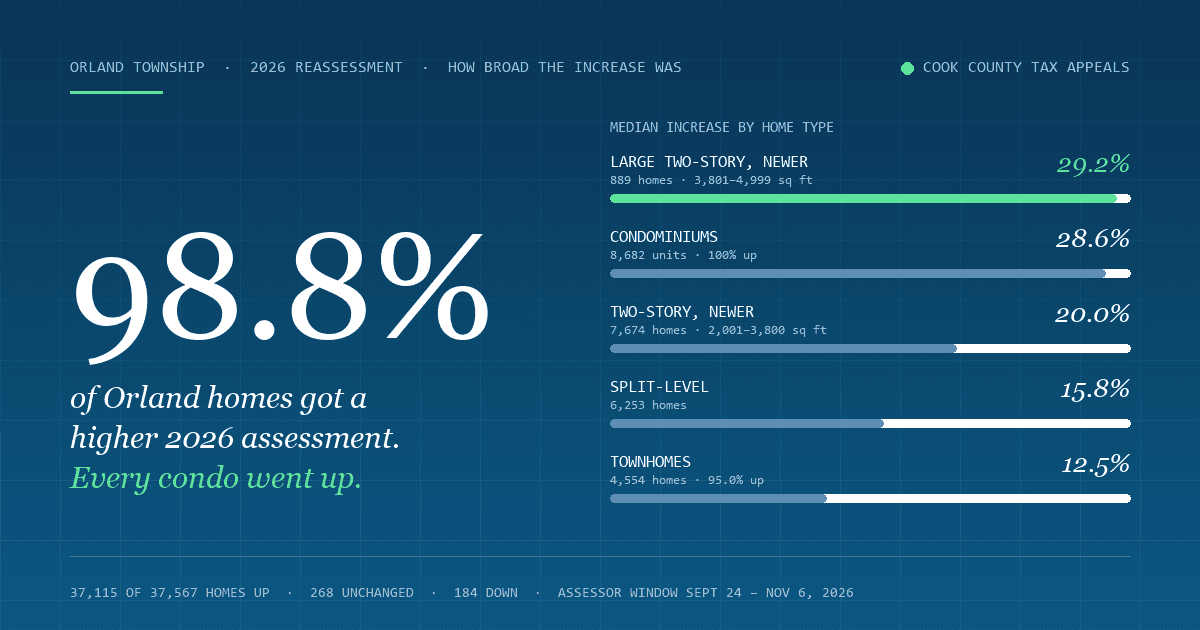
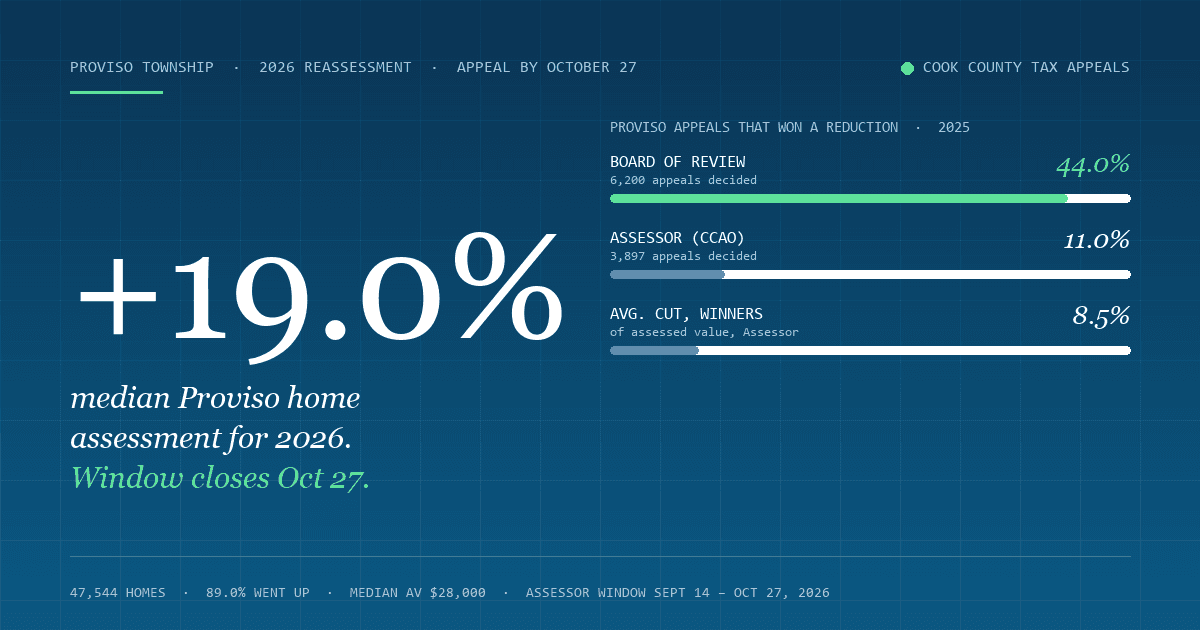
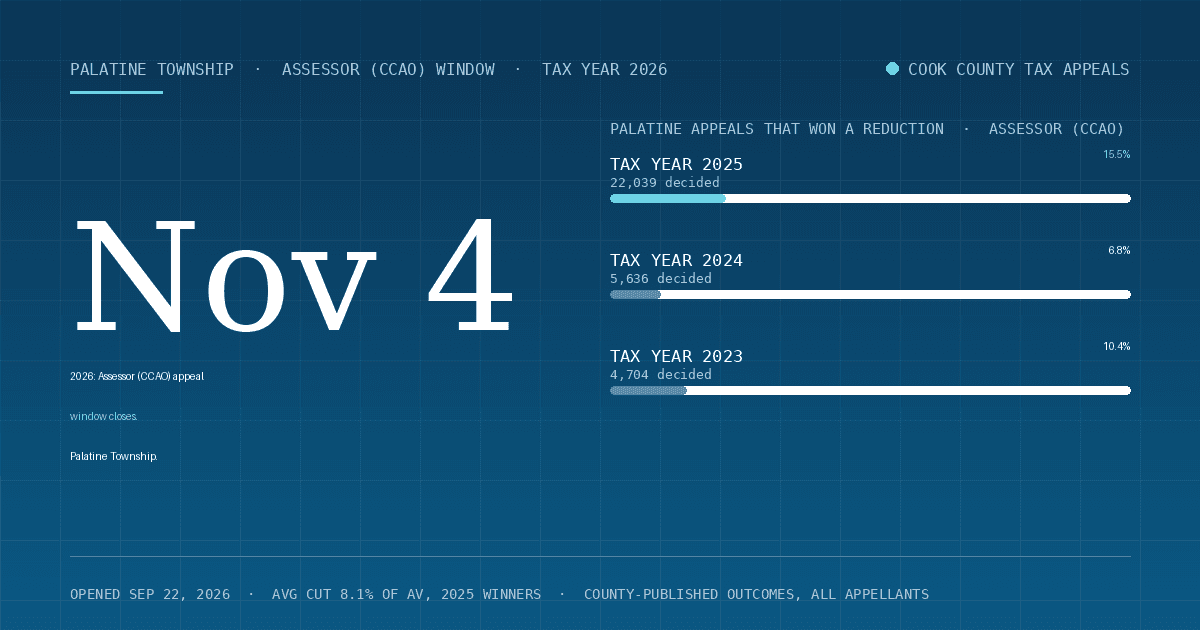
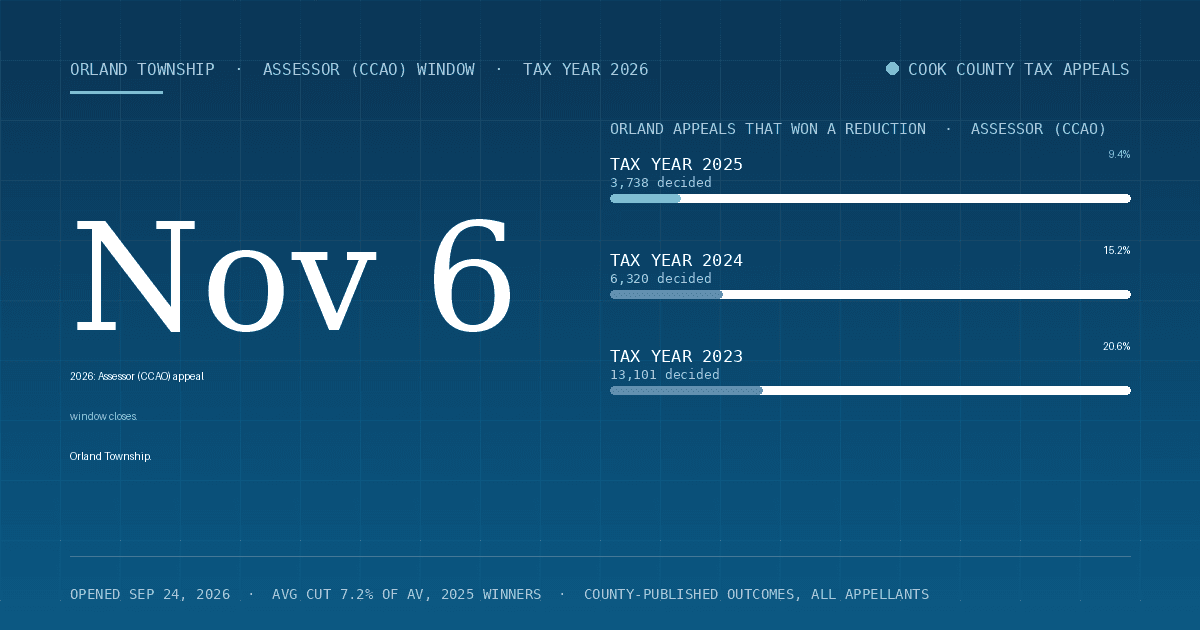
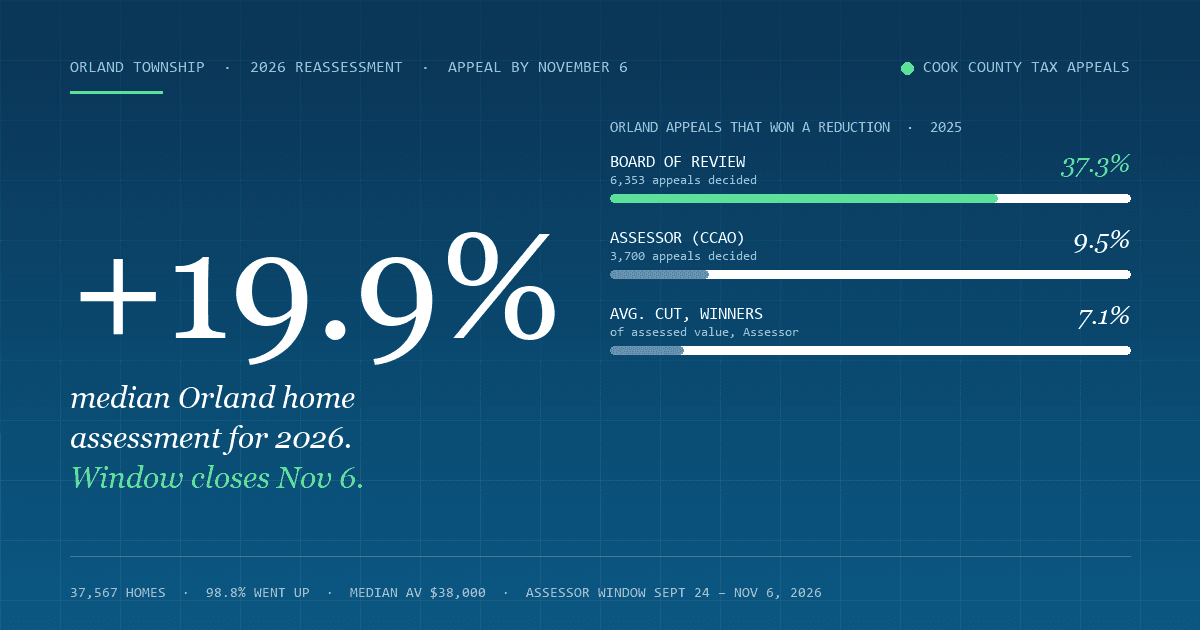
Cook County reassesses one third of the county each year on a three-year cycle: the City of Chicago in 2024, the north suburbs in 2025, the south and west suburbs in 2026. In a reassessment year the Assessor runs a mass-appraisal model over every home in the township, using recent sales and the recorded characteristics, and mails a reassessment notice with the new value. In the two years between, the value generally stays put unless you appeal, the property changes, or a Certificate of Error corrects it. The 2026 south and west suburban reassessment raised median home assessments 20–27% (township by township).
From assessment to bill
| Step | Example: a $300,000 home in Worth Township |
|---|---|
| Estimated market value (Assessor) | $300,000 |
| Assessed value, 10% for residential | $30,000 |
| Equalized assessed value, times the 2025 state equalizer of 3.03 | $90,900 |
| Less Homeowner Exemption | $80,900 |
| Times the composite tax rate (Worth median 11.28%) | about $9,126 a year |
Two of the four inputs are outside your control. The equalizer is set by the state to bring Cook County's assessments to one third of market value overall, and the rate is the sum of the levies of every taxing body on your tax code divided by the tax base. The exemptions are yours if you qualify and file. The assessed value is the one you can argue.
Three reasons an assessment is wrong, and what fixes each
- The characteristics are wrong. The county has your 1,400-square-foot house as 1,900, or a finished basement you do not have. Fix: an appeal with the correct facts, or a Certificate of Error if it has already been billed.
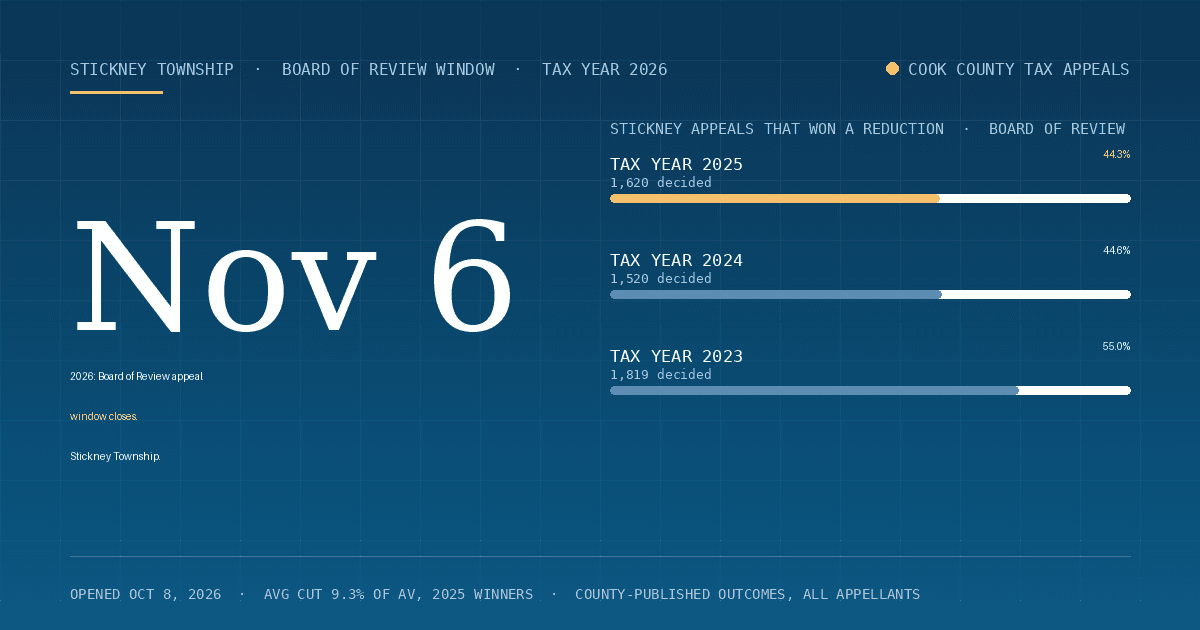
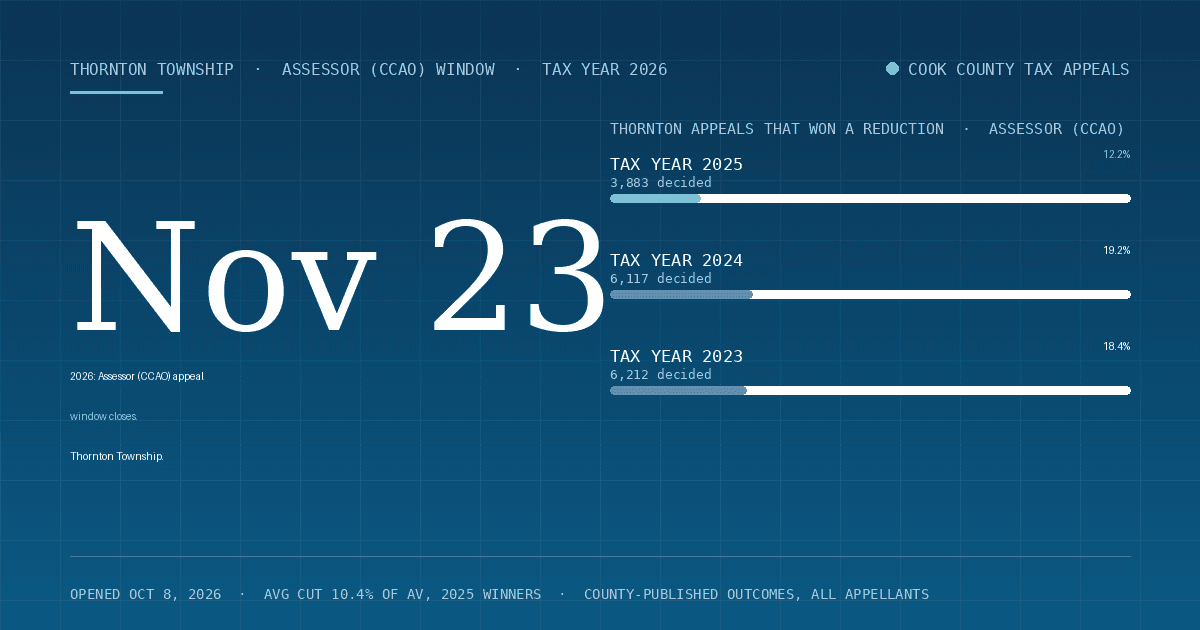
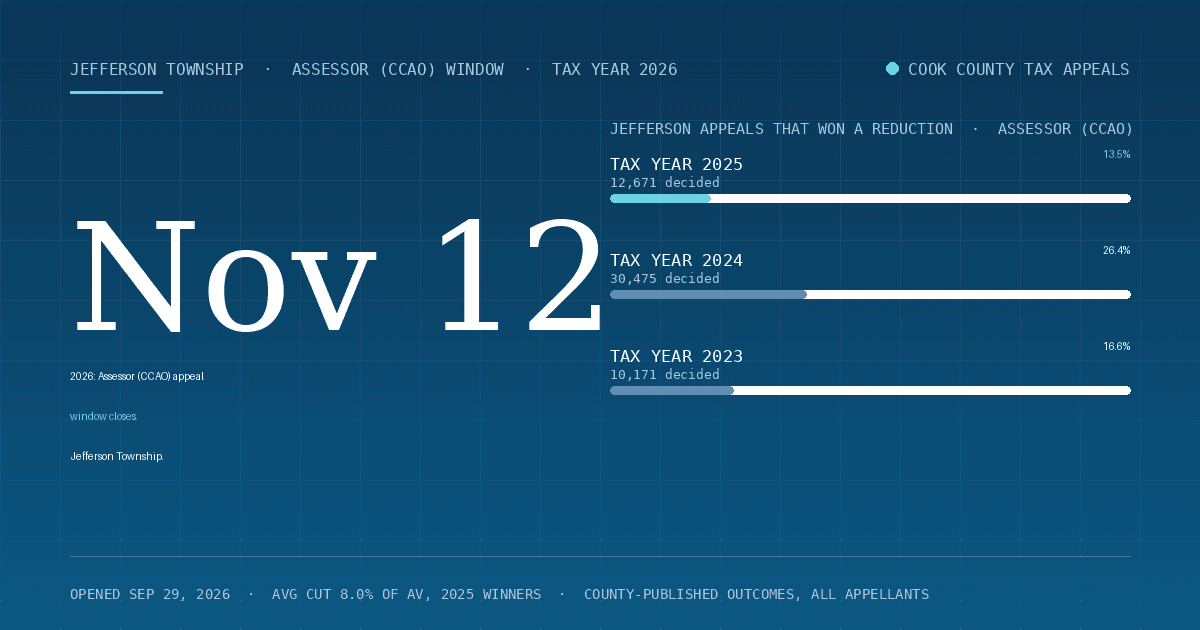
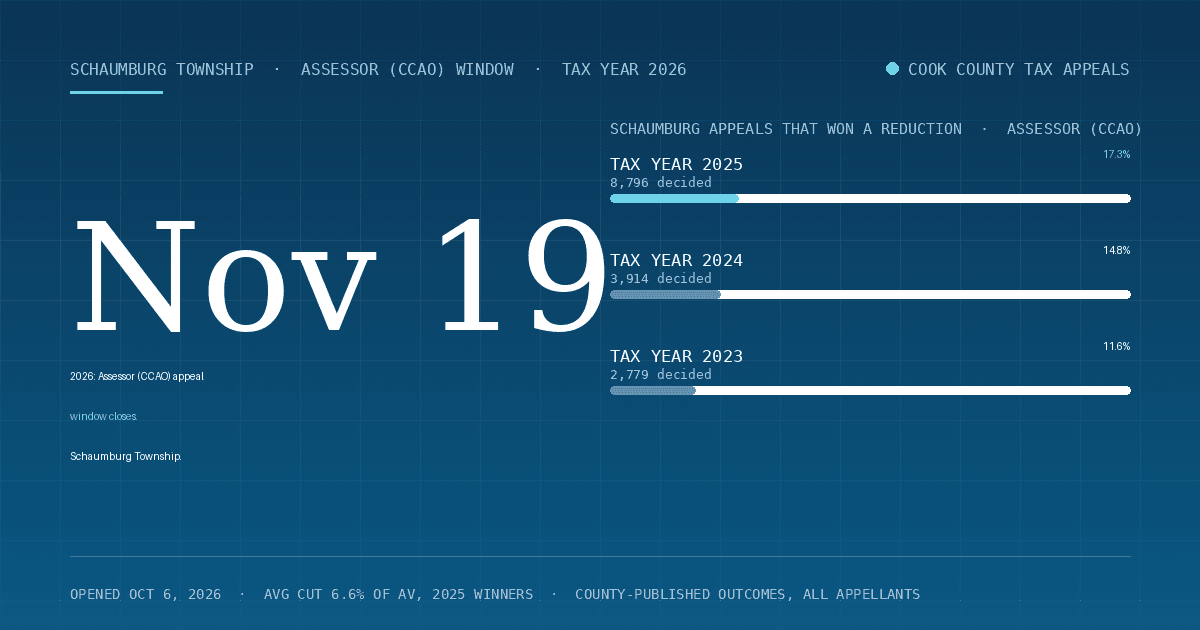
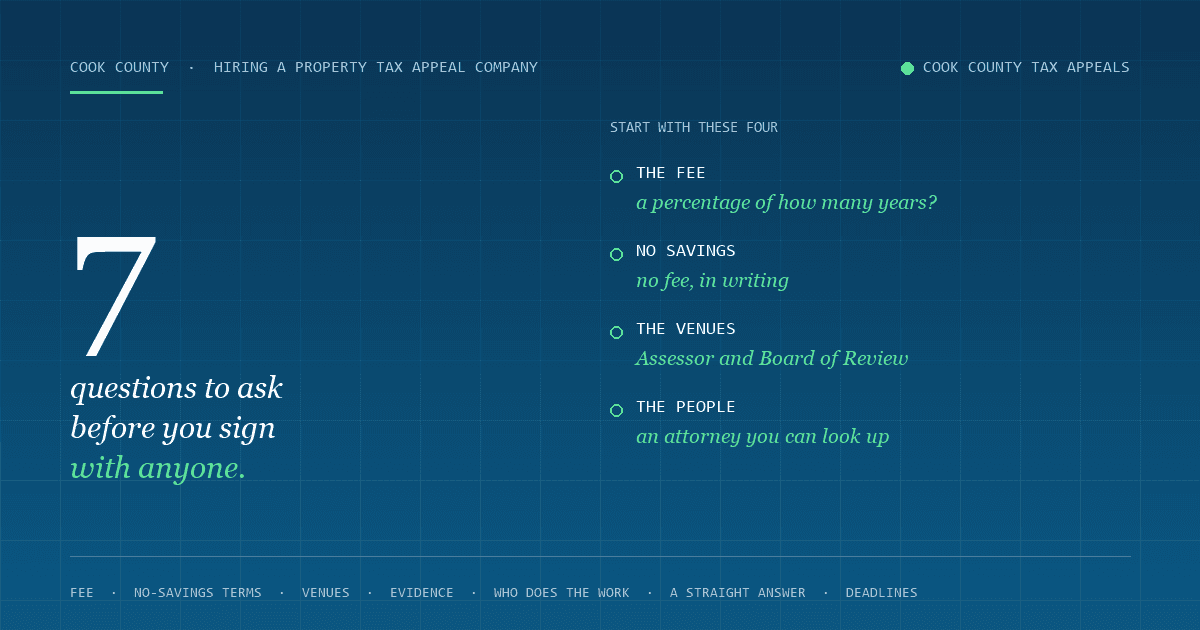
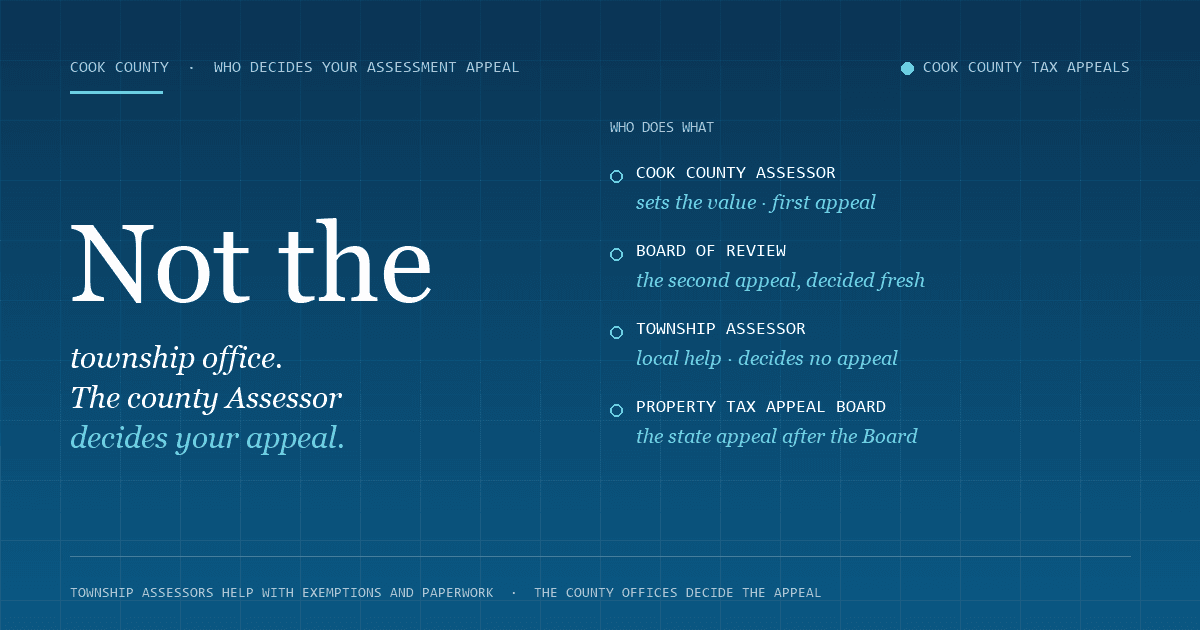
- It is above comparable homes. Your assessed value per square foot is higher than similar homes in the same neighborhood code. This is lack of uniformity, and it is the argument that wins most Cook County residential appeals. Fix: an appeal with five to eight comparables, at the Assessor in your township's window and then at the Board of Review.
- It is above what you paid. A recent arm's-length purchase or a current appraisal below the Assessor's market value. Fix: an overvaluation appeal with the closing statement or appraisal.
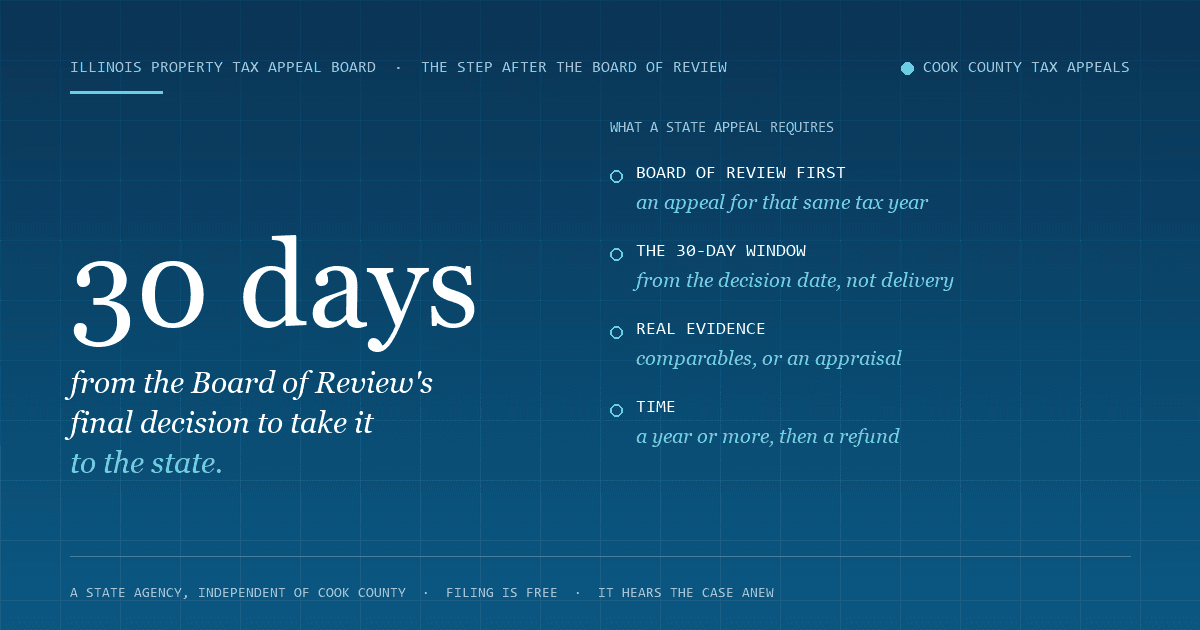
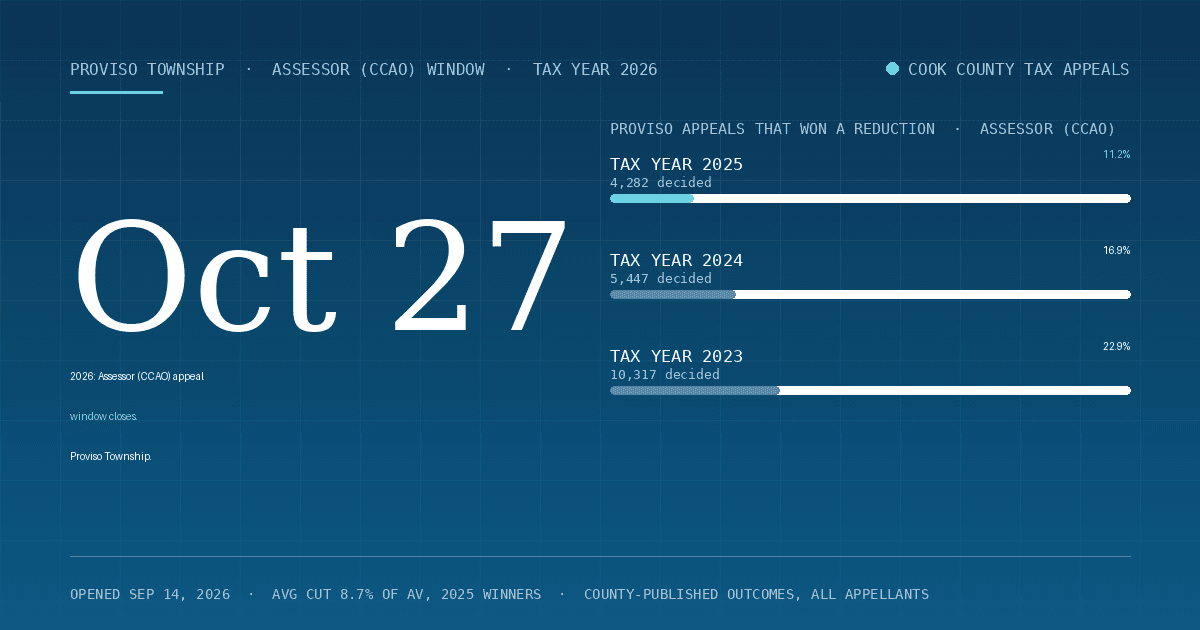
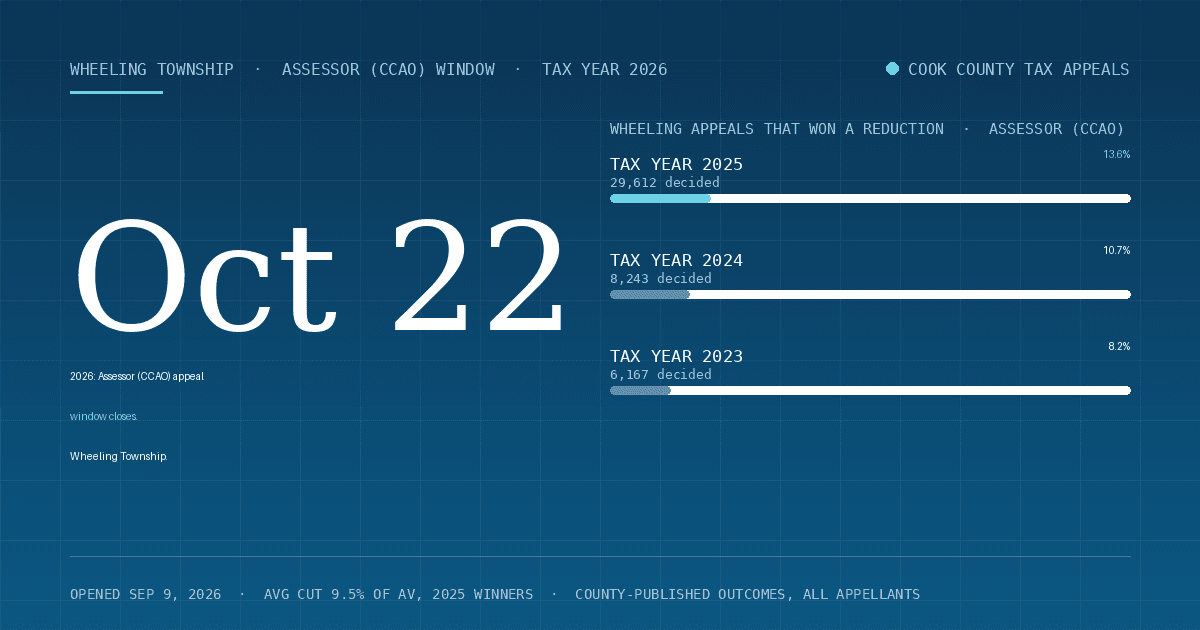
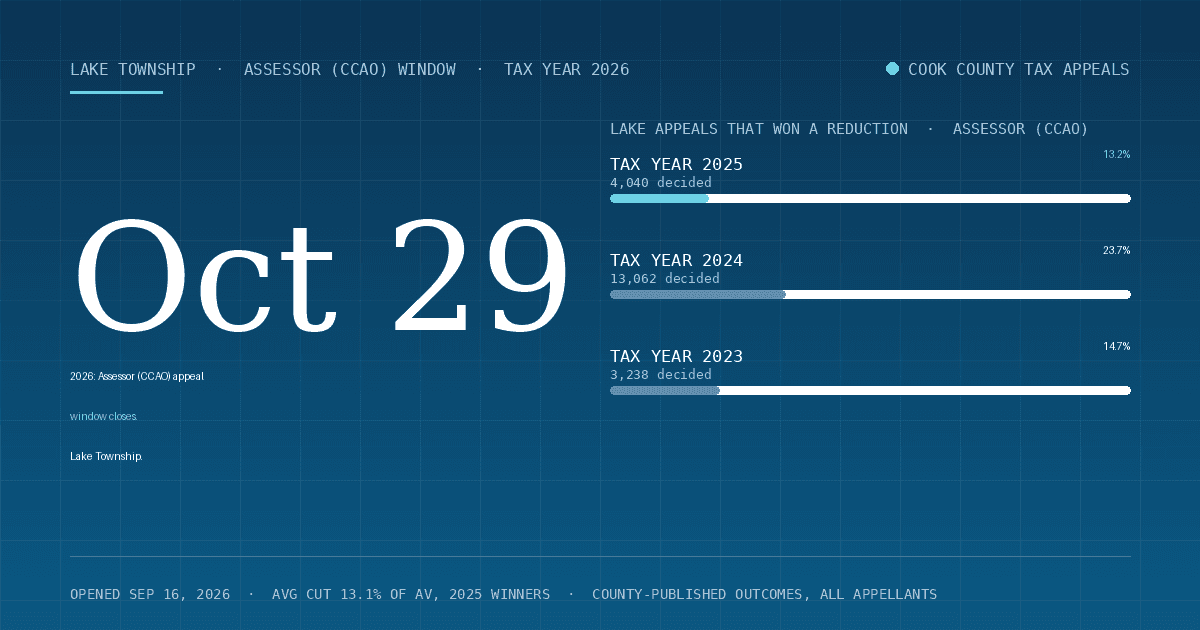
What an appeal is worth
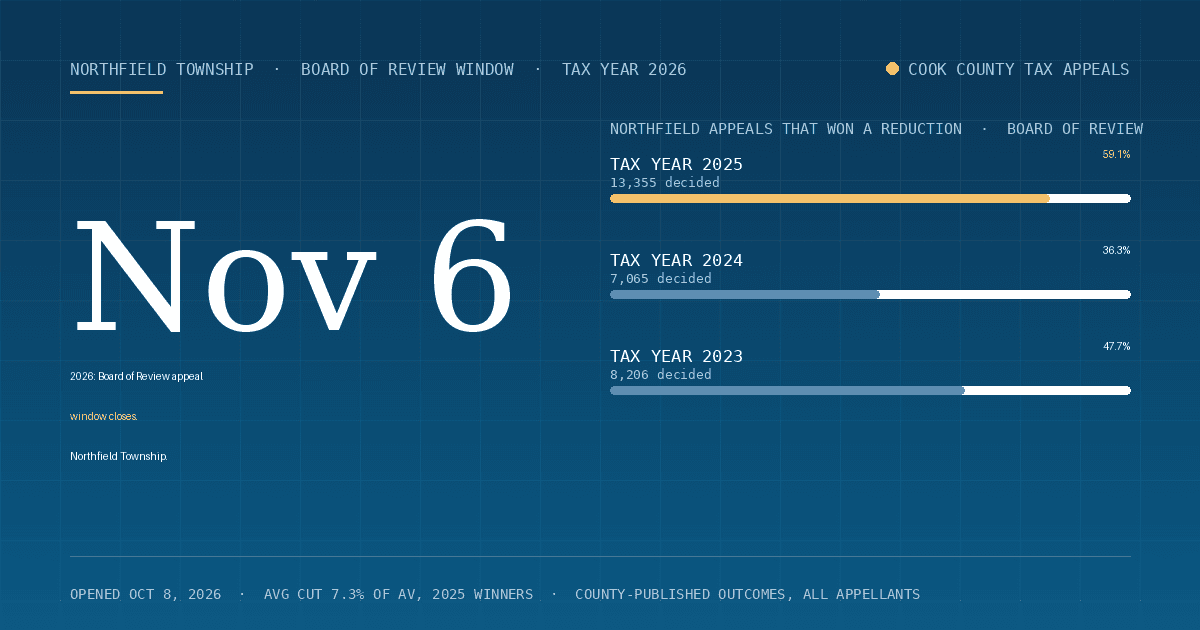
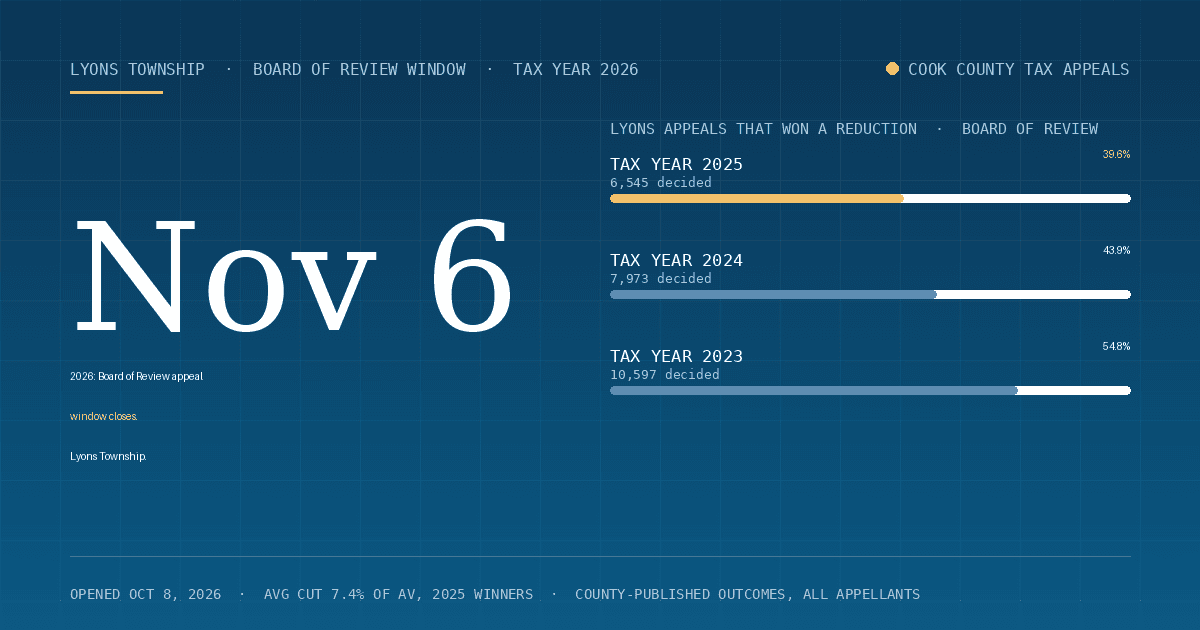
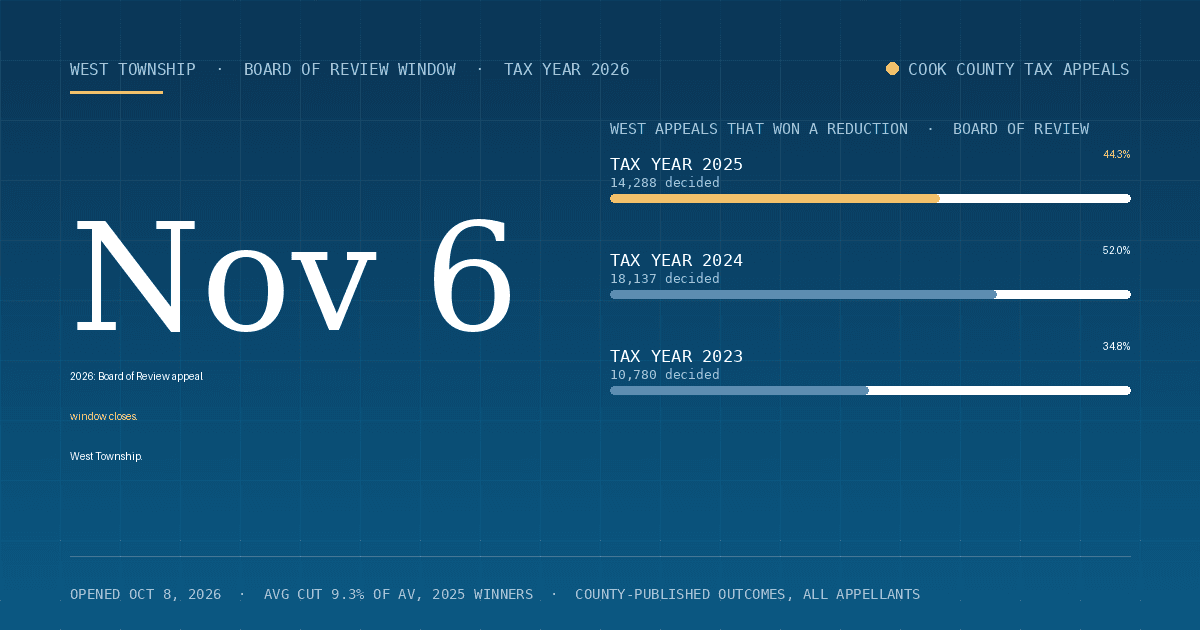
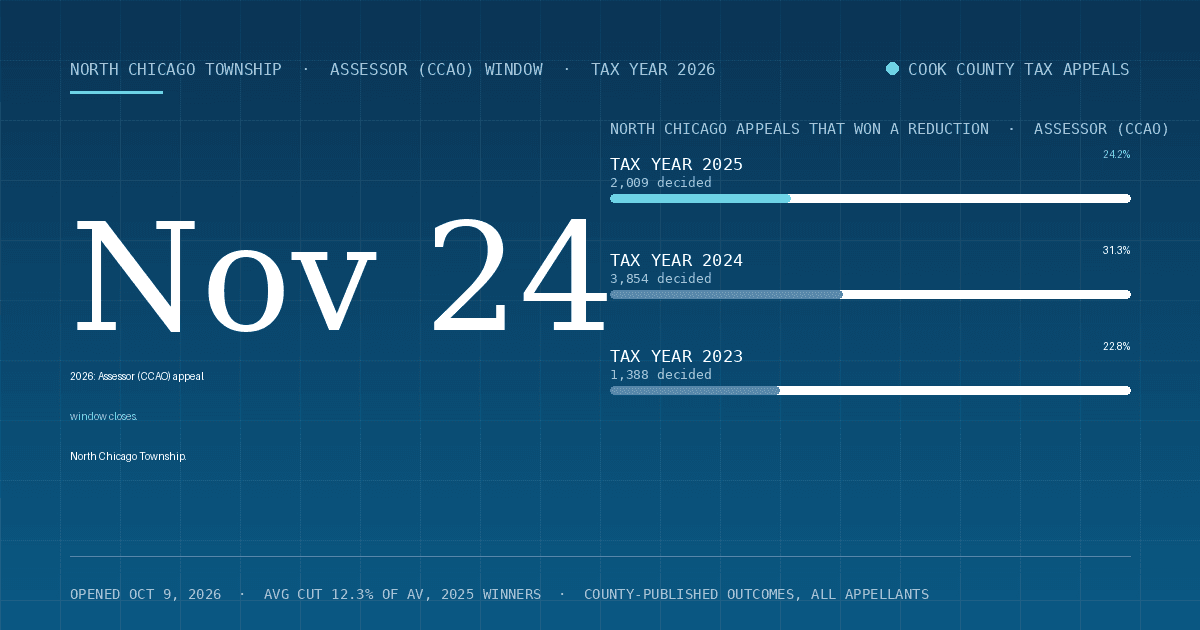
For tax year 2025, the Board of Review reduced 59.0% of residential appeals in the north suburbs, 41.3% in the south and west suburbs and 44.6% in the city, counting each appeal once, with average cuts of 7–9% of assessed value. An 8% cut on the $30,000 example is $2,400 of assessed value, about $820 a year at Worth's rate, for the rest of the three-year cycle. Windows are per township, first at the Assessor for several weeks (42 to 47 days in 2026) and then at the Board for about 30 days; the deadlines page shows every township's status. Our fee is 25% of the first year's savings and nothing if there is no reduction. Start with your address.